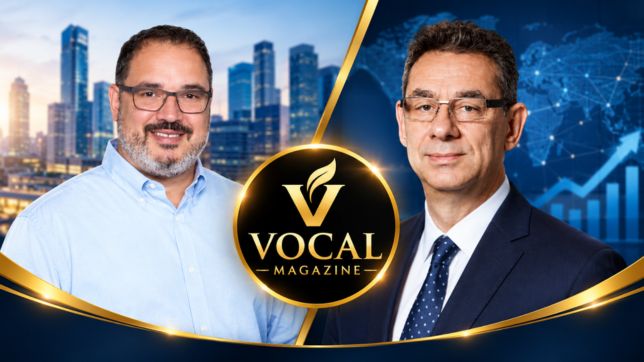
Miguel Patricio and Albert Bourla are two prominent global business executives whose careers illustrate how leadership can shape large multinational corporations during periods of significant change. Although they have built their reputations in very different industries, their professional journeys share several important themes: international experience, long-term corporate leadership, strategic transformation, and the ability to guide organizations through challenging environments.
Miguel Patricio became widely known for his leadership at The Kraft Heinz Company, one of the world’s largest food and beverage companies. Albert Bourla, meanwhile, has led Pfizer, one of the world’s most prominent pharmaceutical companies. Patricio’s work centered heavily on consumer brands, marketing, organizational transformation, and portfolio strategy, while Bourla’s leadership has focused on pharmaceutical innovation, research, vaccines, and the expansion of Pfizer’s scientific pipeline.
Understanding Miguel Patricio and Albert Bourla provides an interesting comparison of two leadership approaches operating in different global industries.
Miguel Patricio: From Global Marketing to Kraft Heinz Leadership
Miguel Patricio is a Portuguese business executive whose career was strongly influenced by international marketing and consumer-brand management. Before joining Kraft Heinz, he spent roughly two decades at Anheuser-Busch InBev, where he held senior leadership positions across different markets.
His experience at a global beverage company helped establish him as an executive with a strong emphasis on brands, consumers, marketing, and international operations. That background became particularly relevant when he joined Kraft Heinz at a difficult point in the company’s history.
Kraft Heinz appointed Patricio as chief executive officer effective July 1, 2019. The company described him at the time as a leader with experience building global consumer brands and emphasizing consumer-first marketing, innovation, and people development.
His appointment came after a difficult period for Kraft Heinz. The company was dealing with declining sales, major impairment charges, changing consumer preferences, and concerns about its long-term growth strategy. The challenge for Patricio was therefore not simply to maintain an established food company but to help change how the organization approached growth.
The Kraft Heinz Transformation
One of the central themes of Patricio’s tenure was the shift toward a more consumer-focused and agile organization. Kraft Heinz announced a transformation strategy in 2020 that included changes to its operating model, strategic priorities, and approach to global growth. The company emphasized combining the advantages of its scale with greater agility.
Patricio also emphasized investments in brands, digital capabilities, customer relationships, and employees. In 2021, Kraft Heinz described its transformation as part of a broader effort to improve its growth profile, strategic focus, and financial flexibility.
This period also coincided with the COVID-19 pandemic, which created unusual challenges for food manufacturers. Consumer behavior changed rapidly, supply chains experienced disruption, and demand patterns across grocery and food-service channels shifted.
Patricio’s leadership consequently involved balancing immediate operational challenges with longer-term brand and organizational changes. The company continued working on its portfolio while attempting to strengthen its financial position and respond more quickly to changing consumer needs.
Patricio’s Transition From CEO
Patricio served as Kraft Heinz CEO from 2019 through the end of 2023. In August 2023, Kraft Heinz announced that Carlos Abrams-Rivera would succeed him as CEO effective January 1, 2024, while Patricio would transition to Non-Executive Chair of the Board.
His responsibilities later evolved as Kraft Heinz pursued another major strategic change. In 2025, the company announced plans to separate its business into two independent publicly traded companies. Patricio became Executive Chair as part of that process, while John T. Cahill led the separation committee.
In December 2025, Kraft Heinz announced another leadership transition. Steve Cahillane was named CEO effective January 1, 2026, and John T. Cahill was designated to succeed Patricio as Board Chair. Patricio was expected to continue serving as a Kraft Heinz board member.
Therefore, Patricio’s legacy at Kraft Heinz extends beyond his years as CEO. His period of leadership included a major effort to reshape the company’s approach to brands, growth, organizational agility, and strategic focus.
Albert Bourla: A Career in Global Pharmaceuticals
Albert Bourla represents a different type of corporate leadership. A Greek-American veterinarian by training, Bourla built his career at Pfizer over more than three decades, progressing through numerous international and executive positions before becoming the company’s chief executive officer.
Bourla became Pfizer’s CEO in January 2019 and continues to serve as Chairman and Chief Executive Officer. Pfizer’s current leadership profile describes his strategy as centered on scientific and commercial innovation, with particular emphasis on oncology, internal medicine, inflammation and immunology, and vaccines.
His long experience inside Pfizer gave him a detailed understanding of the pharmaceutical industry’s research, regulatory, commercial, and international dimensions. That experience became particularly important when the COVID-19 pandemic emerged in early 2020.
The Pfizer-BioNTech COVID-19 Vaccine
The most internationally visible period of Bourla’s leadership came during the COVID-19 pandemic.
Pfizer partnered with German biotechnology company BioNTech to develop an mRNA-based COVID-19 vaccine. Under Bourla’s leadership, Pfizer mobilized research, clinical development, manufacturing, regulatory, and commercial resources at an unusually rapid pace.
The companies began human testing in 2020, and Pfizer later reported that its Phase 3 trial involved more than 43,000 participants. The November 2020 analysis reported 95% efficacy against symptomatic COVID-19 beginning 28 days after the first dose.
On December 11, 2020, the U.S. Food and Drug Administration granted Emergency Use Authorization for the Pfizer-BioNTech COVID-19 vaccine for individuals aged 16 and older.
The speed of the development process became one of the defining features of Pfizer’s pandemic-era story. The company and BioNTech moved from early-stage development to regulatory authorization in less than a year, although the process involved extensive scientific research, clinical testing, regulatory review, manufacturing expansion, and international cooperation.
Bourla subsequently became one of the most recognizable pharmaceutical executives associated with the pandemic response.
Pfizer’s Post-Pandemic Strategy
Bourla’s leadership has not been limited to COVID-19 vaccines. Pfizer has increasingly focused on strengthening its pipeline and expanding areas where it expects long-term pharmaceutical growth.
According to Pfizer’s current leadership information, the company under Bourla is pursuing an ambitious strategy across oncology, internal medicine, inflammation and immunology, and vaccines.
Oncology has become particularly important to the company’s long-term strategy. Pharmaceutical companies frequently face patent expirations, which can reduce revenue from established medicines when competing products or generics enter the market. Pfizer therefore needs to continually develop or acquire new medicines to replenish its portfolio.
This makes research and development, business development, acquisitions, partnerships, and commercialization central components of Bourla’s leadership responsibilities.
Miguel Patricio and Albert Bourla: Key Similarities
Although Miguel Patricio and Albert Bourla work in completely different sectors, their careers reveal several similarities.
First, both have substantial international experience. Patricio developed his career across global consumer markets, while Bourla spent decades working across Pfizer’s international pharmaceutical organization. Their experiences reflect the increasingly global nature of multinational corporate leadership.
Second, both became CEOs during periods when their companies faced important strategic challenges. Patricio inherited a Kraft Heinz organization working to restore growth and rebuild its relationship with consumers. Bourla became Pfizer CEO shortly before the COVID-19 pandemic created an unprecedented global health and business crisis.
Third, both executives have placed considerable emphasis on transformation rather than simply maintaining existing operations. At Kraft Heinz, Patricio emphasized consumer-first marketing, agility, portfolio management, and organizational change. At Pfizer, Bourla has emphasized scientific innovation and the development of new therapeutic opportunities.
Their industries also demonstrate how different forms of corporate transformation can be. A food company must respond to changing consumer tastes, pricing, distribution, competition, and brand perception. A pharmaceutical company must manage scientific discovery, clinical trials, regulatory requirements, intellectual property, manufacturing, and healthcare demand.
Important Differences Between Their Leadership Environments
The differences between Patricio and Bourla are equally significant.
Patricio’s career is rooted strongly in marketing and consumer goods. His challenge was to make established brands more relevant to consumers while improving the company’s organizational agility and growth profile.
Bourla’s environment is fundamentally science-driven. Pharmaceutical leadership involves decisions about research portfolios, clinical development, regulatory approval, manufacturing capacity, intellectual property, and access to medicines.
Their most visible leadership moments also occurred in different circumstances. Patricio’s major challenge was corporate transformation within a mature consumer-products company. Bourla’s most globally prominent challenge involved responding to a public-health emergency while accelerating pharmaceutical innovation.
These differences show that effective executive leadership is highly dependent on industry context. The skills required to manage a global food portfolio are not identical to those needed to manage a multinational pharmaceutical research organization.
The Broader Leadership Lessons
The careers of Miguel Patricio and Albert Bourla demonstrate several broader themes in modern business leadership.
One is the importance of adaptability. Both executives operated in environments where consumer, market, scientific, and operational conditions could change rapidly.
Another is the importance of global experience. Multinational companies operate across different cultures, regulatory environments, consumer markets, and economic conditions. Executives with international exposure can bring perspectives that are valuable when organizations operate across borders.
A third lesson is the relationship between leadership and organizational transformation. Patricio’s Kraft Heinz tenure involved changes to strategy, operating structures, brand investment, and consumer engagement. Bourla’s Pfizer leadership has involved major investments in scientific innovation and the development of new areas of pharmaceutical growth.
Finally, both careers demonstrate that executive leadership is rarely defined by a single decision. Corporate transformation generally develops over multiple years and involves teams, boards, employees, partners, investors, regulators, and customers.
Conclusion
Miguel Patricio and Albert Bourla provide two compelling examples of modern multinational leadership. Patricio’s career illustrates the importance of consumer insight, brand building, marketing, and organizational agility in the packaged-food industry. His tenure at Kraft Heinz included a significant transformation effort and later strategic changes surrounding the company’s planned separation.
Bourla’s career illustrates a different leadership environment, where scientific innovation, clinical development, regulatory processes, and pharmaceutical portfolio management are central. His leadership of Pfizer during the COVID-19 pandemic placed the company at the center of one of the most consequential pharmaceutical development efforts in recent history, while his current strategy continues to emphasize innovation and areas such as oncology.
Although their industries differ dramatically, both executives demonstrate how global leaders must respond to changing environments while balancing short-term pressures with long-term strategic objectives. Their careers also show why leadership at multinational corporations involves much more than financial performance: it requires managing people, brands, innovation, partnerships, risk, and organizational change on a global scale.
For anyone studying international business, corporate strategy, or executive leadership, the stories of Miguel Patricio and Albert Bourla offer useful examples of how two executives navigated complex challenges while leading some of the world’s best-known companies.
FAQs
Who are Miguel Patricio and Albert Bourla?
Miguel Patricio is a Portuguese business executive known for his leadership at Kraft Heinz and his previous career at Anheuser-Busch InBev. Albert Bourla is a Greek-American pharmaceutical executive who has served as Pfizer’s Chairman and CEO.
What did Miguel Patricio do at Kraft Heinz?
Miguel Patricio became Kraft Heinz CEO in 2019 and led efforts focused on brand revitalization, consumer-focused marketing, organizational transformation, and long-term growth.
When did Miguel Patricio become CEO of Kraft Heinz?
Miguel Patricio became Chief Executive Officer of Kraft Heinz in July 2019. He later transitioned from CEO to a board leadership role in January 2024.
Who is Albert Bourla?
Albert Bourla is a Greek-American executive and veterinarian who built his career at Pfizer over more than three decades. He became Pfizer’s CEO in January 2019 and also serves as Chairman.
What is Albert Bourla known for?
Albert Bourla is particularly known for leading Pfizer during the COVID-19 pandemic and overseeing the company’s partnership with BioNTech in developing the Pfizer-BioNTech COVID-19 vaccine.
How are Miguel Patricio and Albert Bourla similar?
Both executives have extensive international business experience and have led major multinational corporations through significant periods of strategic and operational change.
How are their industries different?
Miguel Patricio’s career has primarily focused on consumer goods, branding, and marketing, while Albert Bourla’s career is centered on pharmaceuticals, scientific research, healthcare, and drug development.
What companies did Miguel Patricio and Albert Bourla lead?
Miguel Patricio led The Kraft Heinz Company as CEO, while Albert Bourla has led Pfizer as Chairman and CEO.
What leadership lessons can be learned from Miguel Patricio and Albert Bourla?
Their careers demonstrate the importance of international experience, adaptability, strategic transformation, innovation, and responding effectively to changing market conditions.
Miguel Patricio and Albert Bourla Miguel Patricio and Albert Bourla Miguel Patricio and Albert Bourla Miguel Patricio and Albert Bourla Miguel Patricio and Albert Bourla Miguel Patricio and Albert Bourla Miguel Patricio and Albert Bourla Miguel Patricio and Albert Bourla Miguel Patricio and Albert Bourla Miguel Patricio and Albert Bourla