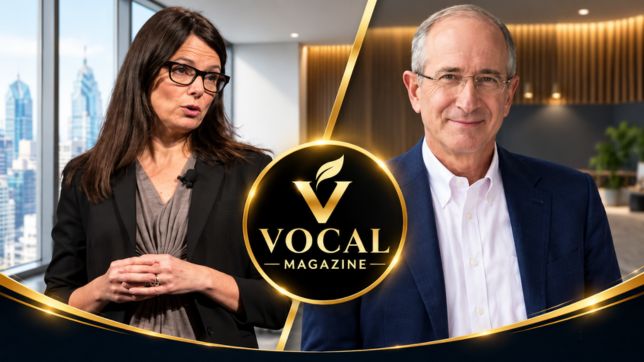
Brian Roberts and Amy Hood are prominent executives whose careers illustrate two different approaches to leadership in large technology, communications, and media companies. Roberts has spent decades helping shape Comcast into a major connectivity, media, and entertainment business, while Hood has served as Microsoft’s Executive Vice President and Chief Financial Officer, overseeing a broad finance organization during the company’s expansion into cloud computing and artificial intelligence.
Although Brian Roberts and Amy Hood do not have a documented personal partnership or direct executive relationship, their careers provide an interesting comparison. Roberts has operated primarily at the intersection of telecommunications, broadband, media, and entertainment. Hood’s work has centered on corporate finance, strategic investment, acquisitions, and Microsoft’s transformation into a cloud- and AI-focused technology company.
Brian Roberts: Building a Broad Media and Connectivity Business
Brian L. Roberts has been associated with Comcast for decades. Comcast identifies him as its Chairman and Co-CEO. He became president of the company in 1990, when Comcast had substantially smaller operations than it does today. Comcast says that under his leadership the company expanded through organic growth, new products, and major strategic transactions.
One of the most important developments in Roberts’ career was Comcast’s acquisition of AT&T Broadband. The transaction was completed in 2002 and brought together cable assets serving more than 21.4 million subscribers across 41 states. The deal substantially increased Comcast’s scale and strengthened its position in broadband and communications.
Roberts subsequently played a major role in Comcast’s expansion beyond traditional cable distribution. In 2011, Comcast and General Electric completed their transaction to create NBCUniversal, with Comcast holding a 51 percent stake and managing the new company. The combination brought together Comcast’s distribution capabilities with NBCUniversal’s television, film, entertainment, and theme-park assets.
Comcast later expanded internationally through its acquisition of Sky. In 2018, Comcast became the majority owner of Sky after acquiring shares held by 21st Century Fox. These transactions demonstrate a recurring theme in Roberts’ career: using acquisitions and scale to broaden Comcast’s business beyond its original cable roots.
Amy Hood: Microsoft’s Financial and Strategic Leader
Amy Hood has taken a different path. Rather than leading a telecommunications or media company as its chief executive, she has served as Microsoft’s top financial executive. Microsoft appointed Hood as Chief Financial Officer in May 2013 after she had already spent more than a decade at the company.
Microsoft currently describes Hood as Executive Vice President and Chief Financial Officer. Her responsibilities extend across the company’s worldwide finance organization and include accounting and reporting, acquisitions, business development and ventures, financial planning and analysis, investor relations, tax planning, treasury, and other financial functions.
Her tenure has coincided with one of the most significant periods of change in Microsoft’s modern history. Under CEO Satya Nadella, Microsoft increasingly emphasized cloud services, subscriptions, enterprise software, and later artificial intelligence. Hood’s role has involved the financial planning and resource allocation necessary to support those strategic priorities.
Microsoft’s own materials connect Hood with the company’s growth in cloud and its continuing technological shift toward AI. The company also identifies her involvement in major acquisitions including LinkedIn, GitHub, and Activision Blizzard.
Two Different Forms of Corporate Leadership
The careers of Brian Roberts and Amy Hood are particularly interesting because they demonstrate that leadership at a large corporation does not always come from the same position.
Roberts has been a chief executive responsible for the overall direction of Comcast. His career has involved decisions about acquisitions, consumer products, broadband infrastructure, entertainment, streaming, and corporate structure.
Hood, meanwhile, has operated from the finance side of Microsoft’s senior leadership. Her influence comes through capital allocation, financial planning, acquisitions, business strategy, and the management of Microsoft’s global finance organization.
This distinction is important. A CEO typically has broad responsibility for an entire company’s strategy and operations, while a CFO is responsible for financial stewardship and plays a major role in determining how resources are allocated. In modern technology companies, however, the CFO role can extend deeply into strategic decision-making.
Strategic Transformation at Comcast
Roberts’ leadership at Comcast can be viewed through the company’s evolution from a traditional cable provider into a diversified communications and entertainment company.
The AT&T Broadband transaction represented a major expansion of Comcast’s cable footprint. The NBCUniversal transaction then added significant media and entertainment capabilities. Later, Sky provided a major international component. Comcast itself has described these transactions as pivotal parts of its long-term development.
This evolution reflects a broader change in the communications industry. Consumers increasingly expected broadband connectivity, digital entertainment, streaming services, and access to content across multiple devices. Comcast therefore developed businesses spanning connectivity and content rather than remaining focused solely on conventional cable television.
More recently, Comcast announced plans in June 2026 to separate its media businesses, including NBCUniversal and Sky, from its connectivity and technology operations through a proposed tax-free spin-off. The company said the transaction is intended to create two independent publicly traded companies with more focused strategies. Comcast also stated that Roberts would remain actively involved in the leadership of both businesses.
That development is significant when considering Roberts’ broader career because it shows that corporate transformation can involve not only acquiring businesses but also reorganizing them when market conditions change.
Microsoft’s Cloud and AI Transformation
Amy Hood’s career at Microsoft provides a different example of corporate transformation. When she became CFO in 2013, Microsoft was already one of the world’s largest technology companies, but the industry was undergoing a major shift toward cloud computing.
Microsoft was increasing its focus on products and services such as Office 365, Windows Azure, and other cloud offerings. In Microsoft’s 2013 financial reporting, Hood highlighted continued investment in cloud services and long-term growth opportunities.
Over subsequent years, cloud computing became central to Microsoft’s business strategy. Microsoft’s finance organization consequently had to support substantial investments in data centers, software development, acquisitions, artificial intelligence, and other technologies.
Hood’s responsibilities have also included major acquisitions. Microsoft’s official biography specifically identifies her involvement in the company’s acquisitions of LinkedIn, GitHub, and Activision Blizzard. These transactions illustrate how a CFO can contribute to corporate strategy well beyond traditional accounting responsibilities.
The Importance of Acquisitions
Acquisitions are a common theme connecting the careers of Brian Roberts and Amy Hood, although the companies they represent have pursued acquisitions for different strategic purposes.
Comcast used major transactions to expand its physical network, content portfolio, entertainment operations, and international reach. AT&T Broadband expanded its communications footprint, NBCUniversal added major entertainment assets, and Sky expanded Comcast’s international presence.
Microsoft’s acquisitions have supported a different set of objectives. LinkedIn strengthened Microsoft’s professional networking and business-services ecosystem, GitHub expanded its developer platform, and Activision Blizzard added a major gaming business to Microsoft’s portfolio. Microsoft identifies these acquisitions as part of Hood’s strategic involvement during her tenure as CFO.
The comparison demonstrates how financial leadership and corporate strategy are closely connected in large organizations. Major acquisitions require financial analysis, capital allocation, risk assessment, integration planning, and long-term strategic thinking.
Leadership in a Changing Digital Economy
Another similarity between Brian Roberts and Amy Hood is the need to respond to technological change.
For Comcast, broadband has become increasingly important as traditional television habits have changed. Consumers now use internet connections for streaming, gaming, communications, work, and other digital activities. Comcast has therefore positioned connectivity and technology as central elements of its business.
Microsoft has experienced an equally significant shift, moving from a business historically associated with personal-computer software toward cloud computing, enterprise services, and AI. Hood’s tenure as CFO has covered much of this transformation.
Their responsibilities are different, but both careers demonstrate the importance of adapting large organizations to changes in technology and consumer behavior.
Financial Discipline and Corporate Decision-Making
Financial management is another area where the careers of Roberts and Hood can be compared without suggesting that they hold identical roles.
As Comcast’s chairman and co-CEO, Roberts participates in decisions involving the company’s overall business strategy and investments. Comcast’s major acquisitions required substantial financial resources and long-term commitments.
Hood’s responsibilities are more directly financial. Microsoft states that she oversees areas including financial planning and analysis, acquisitions, treasury, tax planning, investor relations, accounting, and reporting.
This difference illustrates two complementary forms of corporate leadership. A CEO helps determine where a company should compete and how its businesses should evolve, while a CFO helps ensure that the financial organization can support those objectives responsibly and effectively.
Brian Roberts and Amy Hood: A Broader Comparison
Looking at Brian Roberts and Amy Hood together provides a useful window into modern corporate leadership.
Roberts’ career is closely associated with expansion, media ownership, connectivity, and large-scale corporate restructuring. His leadership has helped Comcast develop businesses spanning broadband, wireless, entertainment, streaming, news, sports, and theme parks. Comcast’s current leadership materials continue to list him as Chairman and Co-CEO.
Hood’s career is associated with financial strategy at one of the world’s largest technology companies. She has helped oversee Microsoft’s finance organization during its transition toward cloud computing and its expansion into AI-related technologies.
The two executives therefore represent different but interconnected dimensions of the modern digital economy. Comcast operates infrastructure and entertainment platforms that connect consumers to information and content, while Microsoft develops software, cloud infrastructure, enterprise technologies, and AI systems used by organizations and individuals worldwide.
Conclusion
The careers of Brian Roberts and Amy Hood demonstrate how corporate leadership can take different forms while remaining closely connected to technology, finance, and strategic transformation.
Roberts has spent decades guiding Comcast through major changes, including the acquisition of AT&T Broadband, the creation and expansion of NBCUniversal, the acquisition of Sky, and the company’s more recent plans to separate its connectivity and media businesses.
Hood has served as Microsoft’s CFO since 2013, overseeing a wide-ranging finance organization while participating in major strategic initiatives and acquisitions. Her tenure has coincided with Microsoft’s expansion in cloud computing and its growing focus on artificial intelligence.
There is no need for a direct corporate relationship between these two executives for their careers to be informative when considered together. Brian Roberts and Amy Hood illustrate two distinct leadership paths within large American technology-oriented corporations: one centered on CEO-level corporate transformation and the other on financial strategy, capital allocation, and organizational growth. Their careers offer a useful perspective on how established companies adapt to rapidly changing technology, consumer behavior, competition, and investment opportunities.
FAQs
Who is Brian Roberts?
Brian Roberts is the Chairman and Co-CEO of Comcast Corporation. He has played a major role in Comcast’s expansion across broadband, media, entertainment, and communications.
Who is Amy Hood?
Amy Hood is the Executive Vice President and Chief Financial Officer of Microsoft. She has been responsible for major areas of Microsoft’s financial strategy and has been involved in important acquisitions and business initiatives.
Are Brian Roberts and Amy Hood related?
There is no publicly documented family relationship between Brian Roberts and Amy Hood. They are discussed together because of their influential executive careers.
What company does Brian Roberts lead?
Brian Roberts is Chairman and Co-CEO of Comcast Corporation, a major company operating across connectivity, media, entertainment, and technology.
What is Amy Hood’s role at Microsoft?
Amy Hood serves as Microsoft’s Executive Vice President and Chief Financial Officer, overseeing the company’s global finance organization and various strategic financial functions.
What are Brian Roberts and Amy Hood known for?
Brian Roberts is known for Comcast’s expansion and transformation across communications and media, while Amy Hood is known for her financial leadership during Microsoft’s expansion into cloud computing and AI.
Did Brian Roberts and Amy Hood work together?
There is no widely documented direct executive partnership between Brian Roberts and Amy Hood. They have led different organizations and operated in different areas of the technology and media industries.
Why are Brian Roberts and Amy Hood often compared?
Their careers can be compared because both have held influential leadership positions at major American corporations and have been involved in large-scale strategic, financial, and technological transformations.
Brian Roberts and Amy Hood Brian Roberts and Amy Hood Brian Roberts and Amy Hood Brian Roberts and Amy Hood Brian Roberts and Amy Hood Brian Roberts and Amy Hood Brian Roberts and Amy Hood Brian Roberts and Amy Hood Brian Roberts and Amy Hood Brian Roberts and Amy Hood Brian Roberts and Amy Hood