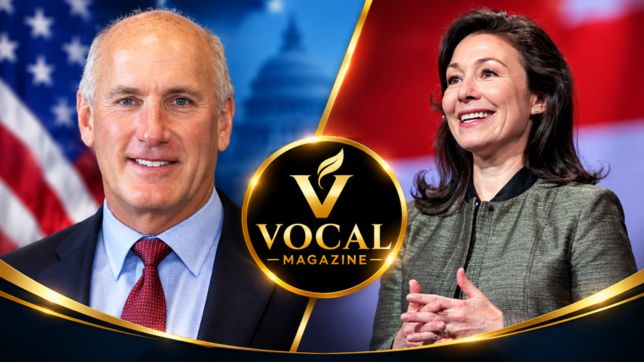
The technology and telecommunications industries are undergoing one of the most significant periods of transformation in their history. Cloud computing, artificial intelligence, high-speed connectivity, and changing workplace expectations are forcing established companies to rethink how they operate and compete. Two executives who have played important roles in this transformation are Safra Catz and John Stankey.
Catz and Stankey lead very different businesses. Catz is Executive Vice Chair of Oracle’s Board of Directors, following more than a decade as Oracle’s chief executive, while Stankey is Chairman and Chief Executive Officer of AT&T. Their companies operate in different parts of the technology ecosystem, but both have been involved in major strategic changes designed to position their organizations for a technology-driven future.
Their careers also provide an interesting look at two different approaches to leading large, complex companies: one centered heavily on cloud infrastructure, enterprise software, and AI, and the other focused on connectivity, wireless networks, fiber broadband, and organizational transformation.
Safra Catz and Oracle’s Transformation
Safra Catz has been one of Oracle’s most influential executives for decades. She joined Oracle in 1999 and eventually became one of the company’s most important leaders. Catz served as Oracle’s CEO from 2014 until September 2025, when the company announced that she would move into the position of Executive Vice Chair of the Oracle Board.
The leadership transition was announced on September 22, 2025. Oracle promoted Clay Magouyrk and Mike Sicilia to serve as its CEOs, while Catz moved into the Executive Vice Chair role. Oracle said the transition would allow Catz and Chairman and CTO Larry Ellison to continue helping guide the company’s direction while the new CEOs lead day-to-day operations.
Catz’s CEO tenure coincided with a major change in Oracle’s business model. Historically known primarily for database software and enterprise technology, Oracle expanded aggressively into cloud infrastructure and cloud applications.
That transformation became particularly important as demand for AI computing increased. Oracle has positioned its Cloud Infrastructure platform as an important part of the infrastructure supporting AI training and inference. When announcing its new leadership structure, Oracle specifically highlighted the growth of its cloud infrastructure and its use in large-scale AI data centers.
Catz’s transition therefore represents more than a change in job title. It marks a new stage in Oracle’s evolution, with operational leadership moving to executives closely associated with cloud infrastructure and AI applications.
John Stankey and AT&T’s Connectivity Strategy
John Stankey represents a different kind of technology leadership story. He has spent more than four decades at AT&T and has worked across numerous parts of the company.
Stankey became AT&T’s CEO and President in July 2020 and was elected Chairman of the Board in February 2025. AT&T’s official leadership profile describes his career as spanning many areas of the company, including technology, strategy, business operations, entertainment, and WarnerMedia.
One of the most significant strategic changes during Stankey’s tenure has been AT&T’s return to a more focused connectivity business.
AT&T completed the separation of WarnerMedia in April 2022, when WarnerMedia was combined with Discovery to create Warner Bros. Discovery. The transaction substantially changed AT&T’s corporate structure and allowed the company to concentrate more heavily on telecommunications and connectivity.
Since then, AT&T has emphasized its wireless and fiber businesses. The company says it invested more than $150 billion in wireless and wireline networks between 2021 and 2025, including capital investment and wireless spectrum acquisitions.
The strategy reflects the growing importance of reliable connectivity in the modern digital economy. Smartphones, cloud applications, streaming services, enterprise software, and artificial intelligence all depend on communications infrastructure.
Comparing the Leadership Paths of Safra Catz and John Stankey
Although Safra Catz and John Stankey have led very different organizations, there are similarities in their professional approaches.
Both executives have operated within large legacy companies facing substantial technological change. Neither Oracle nor AT&T could simply rely on its historical business model. Both organizations needed to invest in new infrastructure while adapting their strategies to changing customer expectations.
Catz’s leadership at Oracle was strongly connected to the company’s transition toward cloud computing. Oracle’s current leadership structure continues that emphasis, with Clay Magouyrk responsible for cloud infrastructure and Mike Sicilia leading alongside him with a strong focus on applications and AI.
Stankey’s transformation at AT&T has been more focused on simplifying the company’s portfolio and expanding its core connectivity infrastructure. Fiber and 5G have become central elements of AT&T’s strategy.
In this sense, the two executives illustrate different versions of transformation. Oracle’s transformation has been closely associated with moving enterprise technology toward cloud and AI infrastructure, while AT&T’s has centered on concentrating resources around networks and connectivity.
AI Is Changing Both Industries
Artificial intelligence is an important connection between the business environments of Oracle and AT&T.
For Oracle, AI represents a major source of demand for cloud infrastructure, databases, enterprise applications, and computing capacity. Oracle has publicly described its infrastructure as supporting AI training and inference, while its newer leadership structure places significant emphasis on AI-enabled applications.
For AT&T, AI is relevant both to the products the company provides and to the way it operates internally. Stankey has discussed the role of AI in reshaping products and employee performance while also emphasizing the importance of technology and talent development.
At the 2026 Harvard Business Review Leadership Summit, Stankey discussed AT&T’s efforts to integrate AI into products and performance while simultaneously changing the company’s culture and maintaining a customer-focused approach.
This demonstrates how AI is no longer limited to software companies. Telecommunications companies increasingly use AI for network operations, customer service, analytics, automation, and other business processes.
John Stankey’s Approach to Career Development
Stankey has also attracted attention for his views on professional development.
In discussions about careers in a rapidly changing technology environment, he has argued that professionals should think about their careers in chapters of roughly four to five years rather than assuming that one educational foundation will remain sufficient throughout their working lives.
He has encouraged workers to become responsible for their own continuing education and to use emerging tools, including AI chatbots, to expand their knowledge. His concept of being the “dean of your own education” reflects a broader shift toward continuous learning.
The idea is particularly relevant in technology because skills can become outdated quickly. Cloud computing, generative AI, automation, cybersecurity, data engineering, and other fields are evolving rapidly.
For professionals, this means that career development may increasingly involve regular skills updates rather than relying exclusively on traditional degrees or formal training.
AT&T’s Changing Corporate Culture
Another major part of Stankey’s leadership at AT&T has been organizational culture.
AT&T has described its transition toward a more “market-based culture,” emphasizing capability, contribution, and commitment. The company’s sustainability materials say merit, capability, and performance have long been important to advancement and that the organization is evolving its culture around these principles.
Stankey has also been direct about the cultural changes taking place within the company. His 2025 employee communications described a movement away from certain traditional workplace expectations toward a more externally focused and performance-oriented model.
The changes have generated discussion about workplace flexibility, employee expectations, and the relationship between corporate culture and performance. Coverage of the changes has included both explanations of AT&T’s strategic objectives and criticism of aspects of the company’s workplace policies.
AT&T’s own reporting, meanwhile, emphasizes employee development, competitive benefits, professional training, and engagement as parts of its evolving culture.
Oracle, AT&T, and the Infrastructure Behind AI
The relationship between Oracle and AT&T can also be understood through the broader technology ecosystem.
Oracle provides cloud infrastructure, databases, enterprise applications, and AI-related technologies. AT&T provides wireless and fiber connectivity that enables businesses and consumers to access cloud services and digital applications.
AI workloads require enormous amounts of computing power and data movement. That makes both cloud infrastructure and high-speed connectivity increasingly important.
A modern AI ecosystem therefore depends on several layers working together. Data must be stored and processed, applications need cloud infrastructure, and users and businesses require reliable networks to access those services.
Oracle’s expansion in AI infrastructure and AT&T’s investment in fiber and wireless networks represent different parts of this larger digital environment.
What Their Leadership Stories Reveal
The careers of Safra Catz and John Stankey demonstrate that transformation at major technology companies can take different forms.
Catz’s Oracle career illustrates the evolution of a traditional enterprise technology company into a major cloud infrastructure and AI participant. Her move to Executive Vice Chair in 2025 also demonstrates how leadership succession can be used to place executives with specialized cloud and AI experience into operational roles.
Stankey’s career illustrates transformation from another direction. After decades at AT&T, he has overseen a strategy that reduced the company’s exposure to media and concentrated more heavily on connectivity, including 5G and fiber. AT&T continues to expand its network investments and pursue opportunities to increase its fiber footprint.
Both stories highlight the importance of adapting established organizations to new technology cycles.
The Future of Safra Catz and John Stankey
Looking ahead, Catz’s role at Oracle is focused on board-level leadership and strategic guidance following the appointment of Clay Magouyrk and Mike Sicilia as CEOs. Oracle continues to invest heavily in cloud infrastructure and AI, making the company’s next phase closely connected to the growth of artificial intelligence.
Stankey remains Chairman and CEO of AT&T, where the company continues to emphasize fiber, wireless connectivity, network investment, and technology-driven transformation. AT&T announced in 2026 a commitment of more than $250 billion to advance U.S. connectivity, with investments spanning fiber and wireless networks.
Their future priorities therefore remain connected to two critical foundations of the digital economy: computing and connectivity.
Conclusion
Safra Catz and John Stankey offer two distinct examples of executive leadership during a period of rapid technological change. Catz helped guide Oracle through its transition from a traditional enterprise software company toward a major cloud and AI infrastructure business before moving into her current Executive Vice Chair role. Stankey has led AT&T through a restructuring that returned the company to a stronger focus on connectivity, fiber, and wireless networks.
Their companies occupy different positions in the technology ecosystem, but their challenges increasingly overlap. AI requires powerful computing infrastructure, extensive data movement, and reliable networks. Cloud services need connectivity, while telecommunications networks increasingly depend on sophisticated software and automation.
As artificial intelligence continues to reshape business, the stories of Catz and Stankey demonstrate how established technology companies are adapting their strategies, infrastructure, leadership structures, and workplace cultures for a rapidly changing digital economy.
FAQs
Who are Safra Catz and John Stankey?
Safra Catz is an Oracle executive who serves as Executive Vice Chair of Oracle’s Board, while John Stankey is Chairman and CEO of AT&T.
What is Safra Catz known for?
Safra Catz is known for her long leadership career at Oracle and for helping guide the company’s expansion into cloud computing and AI infrastructure.
What is John Stankey known for?
John Stankey is known for leading AT&T through major strategic changes, including a greater focus on wireless connectivity, 5G, and fiber broadband.
How are Oracle and AT&T connected to the AI industry?
Oracle provides cloud and computing infrastructure used for AI workloads, while AT&T provides connectivity infrastructure that supports the movement of data and access to digital services.
When did Safra Catz leave the Oracle CEO position?
Safra Catz moved from Oracle’s CEO role to Executive Vice Chair of the Board in September 2025, with Clay Magouyrk and Mike Sicilia becoming Oracle’s CEOs.
When did John Stankey become AT&T CEO?
John Stankey became AT&T’s CEO in July 2020 and later became Chairman of the company’s Board in February 2025.
Safra Catz and John Stankey Safra Catz and John StankeySafra Catz and John Stankey Safra Catz and John Stankey Safra Catz and John Stankey Safra Catz and John Stankey Safra Catz and John Stankey Safra Catz and John Stankey Safra Catz and John Stankey Safra Catz and John Stankey Safra Catz and John Stankey Safra Catz and John Stankey Safra Catz and John Stankey