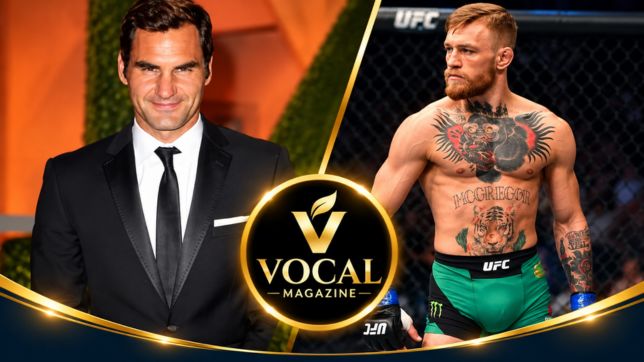
Roger Federer and Conor McGregor come from very different sporting worlds. Federer built his reputation through tennis, a sport associated with precision, patience, and tradition, while McGregor became one of mixed martial arts’ most recognizable figures through his confidence, striking ability, and larger-than-life personality. Despite these differences, both athletes developed into global celebrities whose influence extended well beyond competition.
Their careers demonstrate how modern athletes can become more than sports professionals. Through championships, endorsements, business ventures, media appearances, and personal branding, Federer and McGregor built international identities that connected sport with entertainment, fashion, business, and popular culture.
Roger Federer: Excellence on the Tennis Court
Roger Federer is widely recognized as one of the most accomplished tennis players of his generation. Born in Switzerland, Federer developed a playing style that combined technical precision, movement, creativity, and composure.
His career included 20 Grand Slam singles titles, placing him among the most successful men’s players in tennis history. His victories at Wimbledon, the Australian Open, the US Open, and the French Open helped establish him as a dominant force across different surfaces.
Federer’s success was not based solely on power. His ability to change pace, construct points, use different shots, and remain composed under pressure became important features of his game. His one-handed backhand, efficient serve, and exceptional footwork contributed to a style that many fans considered elegant and technically sophisticated.
However, Federer’s influence extended beyond statistics. He became closely associated with sportsmanship and professionalism, helping him develop an image that appealed to audiences far outside traditional tennis.
Conor McGregor: A New Kind of MMA Superstar
Conor McGregor followed a very different path. Born in Ireland, he rose through the mixed martial arts world and eventually became one of the most commercially recognizable fighters in the sport.
McGregor’s athletic ability was an important part of his success, particularly his striking and left-hand punching power. But his rise cannot be understood through sporting performance alone. He developed a distinctive public personality that made his fights major entertainment events.
His confidence during interviews and press conferences helped generate enormous attention. McGregor frequently promoted his fights through memorable statements, fashion, and dramatic public appearances. This approach turned individual fights into major media occasions.
His victory over José Aldo in 2015 was especially significant. McGregor won the UFC featherweight championship with a first-round knockout, becoming one of the most talked-about figures in MMA. He later became the first fighter in UFC history to simultaneously hold championships in two weight divisions.
Financial Milestones and Commercial Success
One of the most interesting similarities between Federer and McGregor is their ability to generate substantial income outside direct competition.
Federer’s commercial appeal developed over many years. His reputation, international popularity, and professional image attracted partnerships with major global companies. Even after his competitive career ended, his brand remained valuable.
McGregor took a different route toward commercial success. His business activities became an important component of his public identity. One major example was Proper No. Twelve, the Irish whiskey brand associated with McGregor and his business partners.
In 2021, Forbes listed McGregor as the world’s highest-paid athlete, reporting total earnings of approximately $180 million for the year. A significant portion came from business activity, including the reported sale of his stake in Proper No. Twelve.
These financial achievements illustrate an important change in professional sport. The biggest athletes are no longer dependent entirely on salaries or competition winnings. Endorsements, licensing, entrepreneurship, investments, and personal branding can become equally significant.
The $70 Million Off-Field Club
Both Federer and McGregor have also been associated with the small group of elite athletes capable of generating enormous income away from their primary sports.
Federer’s endorsement portfolio became one of the defining aspects of his financial profile. His partnerships with international brands demonstrated how an athlete’s reputation can become a commercial asset.
McGregor’s business strategy was more entrepreneurial. Instead of relying primarily on traditional sponsorships, he used his enormous personal following to build businesses connected to his public identity.
This difference is important. Federer represented the power of long-term reputation and global endorsements, while McGregor demonstrated how social media, entertainment, entrepreneurship, and personality can be combined into a modern athlete brand.
Different Sports, Similar Global Reach
Tennis and MMA have very different cultures.
Tennis has a long-established international tradition, major tournaments, formal etiquette, and individual competition. MMA is comparatively young as a mainstream professional sport and combines multiple martial arts disciplines inside a highly physical combat environment.
Yet both Federer and McGregor reached audiences far beyond their respective sports.
Federer’s matches attracted viewers who appreciated the technical and strategic dimensions of tennis. His image also resonated with people interested in fashion, luxury, philanthropy, and international culture.
McGregor attracted not only MMA fans but also audiences interested in entertainment, celebrity culture, fashion, business, and social media. His ability to create anticipation around a fight helped demonstrate how combat sports could function as major entertainment spectacles.
Public Image and Personality
Perhaps the most obvious contrast between Federer and McGregor is their public personalities.
Federer generally cultivated an image built around composure, professionalism, and respect for sporting traditions. His public appearances were often measured and polished.
McGregor developed almost the opposite type of persona. He became famous for outspoken interviews, psychological games with opponents, extravagant clothing, and dramatic entrances. His willingness to embrace controversy often generated additional attention for his fights.
These different approaches show that there is no single formula for becoming a global sports celebrity. Federer demonstrated the commercial power of elegance and consistency, while McGregor demonstrated the attention generated by confidence, theatricality, and an outspoken personality.
Influence on Popular Culture
Both athletes became cultural figures rather than simply competitors.
Federer’s influence can be seen in tennis itself. Younger players have frequently discussed his technique and impact, while fans around the world associated him with a particular vision of athletic elegance.
His rivalry with Rafael Nadal and Novak Djokovic also became one of the defining storylines in modern tennis. Together, the three players helped create one of the most celebrated eras in men’s tennis.
McGregor’s cultural impact was particularly visible in the growth of MMA’s mainstream profile. His promotional abilities helped attract audiences who may previously have had little interest in mixed martial arts.
His fashion choices, interviews, social-media presence, and business activities also contributed to a broader celebrity identity.
Leadership, Discipline, and Brand Building
Although neither athlete is primarily known as a business executive, their careers provide interesting examples of personal brand management.
Federer’s brand was built gradually. Years of elite performance created credibility, while his public image reinforced that reputation. His commercial partnerships therefore became extensions of an established identity.
McGregor’s approach was more aggressive and personality-driven. He turned his name, image, and audience into commercial opportunities and became closely connected with products and businesses beyond MMA.
Both examples show that sporting success can create opportunities that continue after an athlete leaves the competition arena.
A Legacy Beyond Competition
Federer retired from professional tennis in 2022, ending one of the most celebrated careers in the history of the sport. His legacy is measured not only through Grand Slam titles but also through his influence on tennis culture and his international reputation.
McGregor’s professional MMA career has followed a less conventional trajectory, with periods of competition separated by injuries, business activities, and other projects. Nevertheless, his impact on the commercial profile of MMA remains significant.
Their legacies are therefore built from different ingredients. Federer’s rests heavily on sustained sporting excellence and longevity, while McGregor’s includes championship achievements, promotion, entrepreneurship, and celebrity culture.
Conclusion
Roger Federer and Conor McGregor demonstrate two very different ways an athlete can become a global celebrity.
Federer built his reputation through consistency, technical brilliance, major championships, and an internationally admired professional image. McGregor built his through fighting ability, extraordinary self-promotion, entertainment value, and entrepreneurial ambition.
Their sports may have little in common, but their careers share an important lesson: modern athletes can influence culture far beyond the boundaries of their competitions. Through endorsements, businesses, media, fashion, and personal branding, Federer and McGregor transformed sporting success into broader global recognition.
Whether remembered for a perfect tennis backhand or a dramatic MMA knockout, both athletes became recognizable names far beyond the arenas in which they competed. Their stories illustrate how sporting talent, personality, discipline, and commercial opportunity can combine to create a lasting place in modern celebrity culture.
FAQs
Who are Roger Federer and Conor McGregor?
Roger Federer is a Swiss tennis legend with 20 Grand Slam singles titles, while Conor McGregor is an Irish mixed martial artist and former UFC champion.
How did Roger Federer become famous?
Federer became famous through his exceptional tennis career, winning 20 Grand Slam singles titles and becoming one of the most recognizable players in tennis history.
How did Conor McGregor become a global celebrity?
McGregor combined success in MMA with a distinctive personality, promotional skills, media appearances, and business ventures, helping him become one of the sport’s most recognizable figures.
Did Roger Federer and Conor McGregor earn money outside their sports?
Yes. Federer generated substantial income through international endorsements and partnerships, while McGregor expanded into business ventures and brand-related activities.
What is Roger Federer known for?
Federer is known for his 20 Grand Slam singles titles, elegant playing style, sportsmanship, and major influence on modern tennis.
What is Conor McGregor known for?
McGregor is known for his MMA achievements, striking ability, championship victories, promotional personality, and entrepreneurial ventures.
How are Federer and McGregor different?
Federer generally developed a public image centered on professionalism and composure, while McGregor became known for an outspoken and highly theatrical personality.
What impact did they have on their sports?
Federer became one of the defining players of modern men’s tennis, while McGregor helped bring significant mainstream attention to mixed martial arts and UFC events.
Roger Federer and Conor McGregor Roger Federer and Conor McGregor Roger Federer and Conor McGregor Roger Federer and Conor McGregor Roger Federer and Conor McGregor Roger Federer and Conor McGregor Roger Federer and Conor McGregor Roger Federer and Conor McGregor Roger Federer and Conor McGregor Roger Federer and Conor McGregor Roger Federer and Conor McGregor Roger Federer and Conor McGregor Roger Federer and Conor McGregor