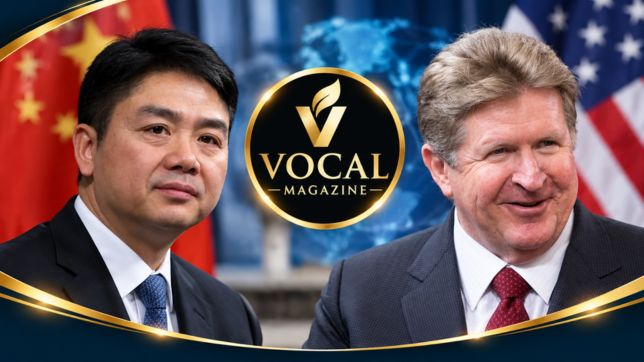
Richard Liu and Germán Larrea are two prominent business figures whose careers illustrate very different paths to extraordinary wealth and corporate influence. Liu, also known as Liu Qiangdong, built his reputation through technology, e-commerce, retail, and logistics in China. Larrea, meanwhile, has spent decades associated with mining, transportation, and infrastructure through Grupo México. Their industries are fundamentally different, yet both have become closely connected with large-scale business operations and long-term corporate strategy.
While Liu represents the rapid transformation of consumer commerce through technology, Larrea represents the continuing importance of natural resources and physical infrastructure. Their stories offer an interesting look at how modern business empires can emerge from very different foundations.
Richard Liu: From Retail Entrepreneur to Technology Leader
| Area | Richard Liu | Germán Larrea |
| Primary association | JD | Grupo México |
| Main industries | E-commerce, retail, technology, logistics | Mining, transportation, infrastructure |
| Geographic foundation | China with international connections | Mexico with operations in the U.S. and Peru |
| Business model | Technology and supply-chain driven | Natural resources and infrastructure driven |
| Leadership role | Founder and chairman | Chairman and CEO |
| Major market influences | Consumer demand, technology, e-commerce | Copper prices, commodities, infrastructure |
Richard Qiangdong Liu is the founder and chairman of JD.com, one of China’s major e-commerce companies. According to JD.com’s corporate biography, Liu founded the business in 2004 and has served as chairman since its inception. He was also the company’s chief executive until April 2022.
Liu’s entrepreneurial journey began before JD.com became a major online retail platform. JD’s corporate history records that he started a business in Beijing in 1998 selling electronic products. After operating a physical retail business, he moved toward online commerce, eventually establishing the company that developed into JD.com.
This transition from physical retail to digital commerce was significant because China’s consumer market was undergoing rapid technological change. Online shopping was becoming increasingly important, and companies needed more than websites to compete effectively. Logistics, warehousing, product authenticity, customer service, and delivery speed became important parts of the customer experience.
Liu’s approach helped JD.com develop around a supply-chain-based business model. The company invested heavily in fulfillment and logistics infrastructure, helping distinguish its operations from a simple online marketplace.
The Growth and Evolution of JD.com
Under Liu’s leadership, JD.com expanded from an online retailer into a broader technology and service organization. The company operates across areas including retail, logistics, health, and technology.
Liu remains chairman even though he stepped down as CEO in 2022. JD.com announced at the time that Lei Xu would become CEO, while Liu would continue focusing on long-term strategy and other areas of the company’s development.
His continuing involvement illustrates an important feature of large technology companies: founders can move away from day-to-day management while retaining a significant role in corporate direction.
Liu also serves in leadership roles connected with JD’s affiliated businesses. JD.com lists him as chairman and non-executive director of JD Health and chairman and non-executive director of JD Logistics.
His career therefore extends beyond the image of a traditional e-commerce entrepreneur. His influence is connected with retail technology, supply chains, logistics, and the infrastructure required to serve large numbers of consumers.
Germán Larrea: A Different Kind of Business Empire
Germán Larrea Mota Velasco followed a very different path. He is closely associated with Grupo México, a major conglomerate whose activities include mining, transportation, and infrastructure.
Forbes describes Larrea as the majority owner of Mexico’s largest copper mining company, Grupo México, which has operations in Mexico, Peru, and the United States. Forbes also notes that under his leadership the group expanded into infrastructure and rail transportation.
Grupo México’s own corporate reporting has identified Larrea as chairman of the board and chief executive. A company annual report lists him as CEO and chairman, alongside executives responsible for the mining, transportation, and infrastructure divisions.
Unlike Liu’s technology-centered business environment, Larrea’s empire is deeply connected to physical resources. Copper mining depends on geological resources, industrial equipment, transportation networks, energy, labor, and international commodity markets. Rail transportation and infrastructure add another layer of complexity.
Mining, Copper, and Global Markets
Copper is one of the most important industrial metals in the global economy. It is widely used in electrical systems, construction, transportation, manufacturing, and modern energy infrastructure.
This means companies involved in copper mining are influenced by factors that differ substantially from those affecting online retailers. Commodity prices, production costs, global demand, environmental requirements, infrastructure investment, and international economic conditions can all affect the mining business.
Grupo México’s geographic reach also gives Larrea’s business profile an international dimension. Forbes identifies operations associated with Mexico, Peru, and the United States.
The company’s transportation and infrastructure activities further demonstrate how Larrea’s business interests extend beyond mining alone.
Comparing Their Business Worlds
Richard Liu and Germán Larrea demonstrate two contrasting models of modern wealth creation.
| Area | Richard Liu | Germán Larrea |
| Primary association | JD.com | Grupo México |
| Main industries | E-commerce, retail, technology, logistics | Mining, transportation, infrastructure |
| Geographic foundation | China with international connections | Mexico with operations in the U.S. and Peru |
| Business model | Technology and supply-chain driven | Natural resources and infrastructure driven |
| Leadership role | Founder and chairman | Chairman and CEO |
| Major market influences | Consumer demand, technology, e-commerce | Copper prices, commodities, infrastructure |
The comparison shows that there is no single formula for building a major business empire. Liu’s career developed alongside China’s digital consumer economy, while Larrea’s career is rooted in industrial resources and infrastructure.
Wealth and Public Profiles
Their fortunes also reflect the markets in which their companies operate. Billionaire wealth estimates can change considerably because they depend on share prices, ownership stakes, exchange rates, and other assets.
For example, Forbes listed Germán Larrea Mota Velasco and family at approximately $65.8 billion in a September 15, 2026 real-time estimate. Forbes listed Richard Liu at approximately $5.7 billion in a September 11, 2026 real-time estimate. These figures should therefore be understood as snapshots rather than permanent measures of personal wealth.
Their public profiles are also notably different. Liu became a recognizable figure within China’s technology and e-commerce sector through JD.com’s rapid development. Larrea has generally maintained a considerably more private public profile despite his prominent position within Grupo México.
Leadership Through Different Generations of Business
One of the most interesting aspects of their careers is how their companies reflect different economic eras.
Liu’s rise coincided with the expansion of internet commerce and China’s rapidly developing consumer market. His challenge was to create systems capable of serving customers at enormous scale while integrating technology with physical logistics.
Larrea’s career reflects an older but still essential industrial model. Mining and transportation require long-term investment, substantial physical assets, and complicated operating networks. The success of such businesses depends on managing infrastructure and resources over extended periods.
Yet both models require similar broad leadership capabilities: capital allocation, strategic planning, operational management, risk management, and the ability to adapt to changing economic conditions.
Challenges and Corporate Responsibility
Large companies in both industries also face significant scrutiny.
Technology and e-commerce companies must deal with questions surrounding data, competition, consumer protection, employment, logistics, and corporate governance. Mining companies face additional issues involving environmental impact, worker safety, communities, water, land use, and resource management.
Forbes notes that Grupo México faced scrutiny following a 2014 spill at a copper mine in Sonora, Mexico, which contaminated nearby rivers. The company agreed to establish a $150 million trust following a government request to compensate affected residents.
Such events demonstrate why the influence of major business leaders extends beyond financial performance. Their decisions can affect employees, consumers, communities, investors, and governments.
Lasting Influence on Global Business
Richard Liu and Germán Larrea represent two very different sides of contemporary global business.
Liu’s story is closely associated with the digital transformation of retail. Beginning with physical electronics retail, he helped build JD.com into a large technology and supply-chain enterprise. His continued role as chairman reflects the lasting influence founders can maintain after stepping away from executive management.
Larrea’s story is connected to the industrial economy. Through Grupo México, his business interests encompass copper mining, transportation, and infrastructure across multiple countries. His career demonstrates how control of natural resources and physical networks can create enormous economic influence.
Ultimately, Richard Liu and Germán Larrea are notable not because their businesses are identical, but because they demonstrate how different industries can produce globally significant corporate leaders. Liu’s career reflects technology, consumers, and digital supply chains, while Larrea’s reflects minerals, transportation, and infrastructure. Together, their stories provide a fascinating comparison of two business empires operating at very different ends of the global economy.
FAQs
Who is Richard Liu?
Richard Liu, also known as Liu Qiangdong, is the founder and chairman of JD.com, a major Chinese e-commerce and technology company.
Who is Germán Larrea?
Germán Larrea Mota Velasco is a Mexican business executive associated with Grupo México, a major company involved in mining, transportation, and infrastructure.
What is Richard Liu known for?
Richard Liu is best known for founding JD.com and helping develop it into a large-scale e-commerce, logistics, and technology company.
What industries does Germán Larrea operate in?
Germán Larrea’s business interests are primarily associated with copper mining, rail transportation, and infrastructure through Grupo México.
How are Richard Liu and Germán Larrea different?
Richard Liu built his business primarily around technology, e-commerce, retail, and logistics, while Germán Larrea’s business empire is centered on mining, transportation, and infrastructure.
Are Richard Liu and Germán Larrea billionaires?
Yes. Both have been listed among the world’s billionaires, although their estimated wealth changes over time because of market prices and other factors.
Richard Liu and Germán Larrea Richard Liu and Germán Larrea Richard Liu and Germán Larrea Richard Liu and Germán Larrea Richard Liu and Germán Larrea Richard Liu and Germán Larrea Richard Liu and Germán Larrea Richard Liu and Germán Larrea Richard Liu and Germán Larrea Richard Liu and Germán Larrea Richard Liu and Germán Larrea