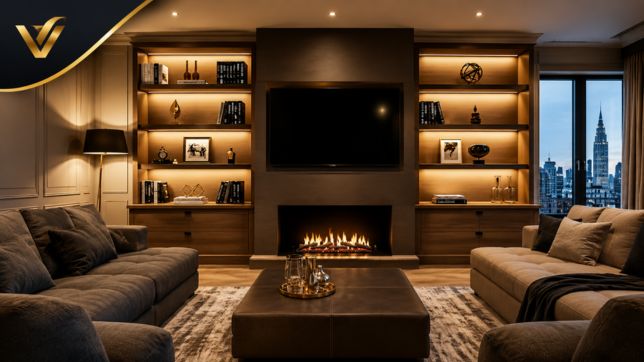
What Is a Media Wall and Why Is It So Popular?
A media wall has become one of the most desirable interior design features for modern homes. It combines entertainment, storage, lighting, and architectural design into one carefully planned installation. Instead of having a television mounted on a plain wall with visible cables and separate furniture pieces, a media wall creates a seamless focal point where every element works together.
A well-designed media wall typically integrates a flat-screen television, sound systems, storage compartments, decorative shelving, and sometimes an electric fireplace. This approach transforms an ordinary living room into a sophisticated entertainment space while improving organisation and visual appeal.
The growing popularity of media walls comes from the desire for cleaner interiors and smarter use of space. Homeowners increasingly prefer designs that hide unwanted wires, reduce clutter, and create a luxury atmosphere without requiring excessive decoration.
Whether you choose a minimalist design with wood slats, a traditional fireplace arrangement, or a fully bespoke luxury installation, a media wall can completely change the character of your home.
The Evolution of Media Walls in Modern Interior Design
From Simple TV Units to Architectural Features
In the past, televisions were usually placed on basic TV stands or attached directly to walls without much consideration for design. While functional, these setups often created problems such as exposed cables, limited storage, and a lack of connection with the rest of the room.
The modern media wall has changed this concept by turning entertainment systems into part of the architecture itself. Instead of being an afterthought, the television becomes part of a carefully designed feature wall.
Interior designers now treat media walls as statement pieces that combine practicality with creativity. They can be customised according to room size, personal taste, and lifestyle requirements.
Why Homeowners Are Choosing Media Walls
Several factors have contributed to the popularity of mediawalls:
- They create a luxury appearance without major structural changes.
- They hide cables and electrical connections.
- They provide additional storage solutions.
- They improve the viewing experience.
- They allow integration of fireplaces and lighting.
- They increase the overall visual value of a living space.
A thoughtfully designed media wall does more than hold a television. It creates an atmosphere where families can relax, entertain guests, and enjoy technology in a stylish environment.
Fireplace and Alcove Media Walls: A Classic Design Choice
Combining Warmth and Entertainment
One of the most popular media wall styles is the fireplace and alcove design. This arrangement places a television above a wide electric fireplace, creating a balanced and symmetrical feature.
The fireplace adds warmth and comfort, while the television provides entertainment. Together, they form a central point that naturally attracts attention in the room.
Modern electric fireplaces designed for media walls are specifically created with safety in mind. Many models use forward heat ventilation, often called “cool-wall” technology, which helps protect the television and other electronics from excessive heat exposure.
Built-In Alcoves and Storage Solutions
Many fireplace media walls include built-in alcoves on either side of the main feature. These areas can be used for:
- Decorative objects
- Books
- Plants
- Artwork
- Speakers
- Lighting features
Hidden cabinets are often installed at the bottom of the unit to store gaming consoles, remote controls, sound equipment, and other accessories.
This combination of open display areas and concealed storage creates a clean and organised appearance.
Modern Media Wall Designs With Slat Wood and Minimalist Features
Adding Texture With Wood Slats
For homeowners who prefer contemporary interiors, slat wood designs have become extremely popular. Vertical wooden panels placed behind the television add depth, warmth, and natural texture.
This style works particularly well in Scandinavian, modern, and minimalist homes because it creates a calm and balanced atmosphere.
Wood slats can also provide acoustic benefits by reducing sound reflections. This makes them a practical choice for entertainment areas where audio quality matters.
Minimalist Design Philosophy
A minimalist media wall focuses on simplicity. Instead of excessive decoration, the design uses clean lines, neutral materials, and carefully positioned lighting.
Common features include:
- Flat television mounting
- Hidden cables
- Simple shelving
- Neutral colours
- Integrated LED lighting
The result is a sophisticated entertainment area that feels modern without becoming overwhelming.
Luxury Media Walls With Premium Materials and Lighting
Creating a High-End Interior Feature
Luxury media walls often include premium materials such as marble finishes, textured panels, custom cabinetry, and polished surfaces. These designs are popular in high-end homes where the media wall becomes a major interior centrepiece.
A luxury media wall is usually created through a bespoke design process where every measurement and material choice is customised.
Unlike standard furniture units, bespoke installations are built specifically for the room, ensuring a perfect fit and seamless appearance.
The Importance of Ambient Lighting
Lighting plays a major role in creating an impressive media wall. Integrated LED strips can be placed:
- Behind the television panel
- Inside shelving areas
- Around the fireplace
- Along decorative features
Smart lighting systems allow homeowners to adjust brightness and colour depending on the mood or activity.
Soft ambient lighting can improve the viewing experience by reducing harsh contrasts while adding a premium visual effect.
Key Components of a Well-Built Media Wall
Structural Frame
The foundation of a mediawall is usually a strong timber stud frame. This structure supports the plasterboard covering and provides space for electrical wiring, storage areas, and recessed features.
After construction, the surface is normally skimmed and painted to create a smooth finish.
A professional frame ensures durability and prevents future issues such as cracks or movement.
Cable Management System
One of the biggest advantages of a mediawall is the ability to completely hide cables.
During installation, electricians create internal routes for:
- Television cables
- HDMI connections
- Speaker wiring
- Internet cables
- Power supplies
Strategically placed sockets and access points make future upgrades easier while keeping the final appearance clean.
Recessed TV Cavity
A recessed television cavity allows the screen to sit flush with the front of the wall. This creates a built-in appearance rather than a television simply attached to the surface.
The cavity must be measured accurately to match the television size and ventilation requirements.
Media Fireplace Installation
When adding a fireplace, choosing the correct model is essential. Media wall fireplaces are designed differently from traditional fireplaces because they must work safely alongside electronic equipment.
Important considerations include:
- Heat direction
- Ventilation
- Size compatibility
- Remote control features
- Energy efficiency
Ventilation and Maintenance Access
Although mediawalls are designed to hide technology, access and ventilation remain important.
Proper ventilation prevents electronic equipment from overheating, while hidden access panels allow maintenance without damaging the design.
A professionally planned installation balances appearance with long-term functionality.
DIY Media Wall vs Professional Installation
Building Your Own MediaWall
Some homeowners choose a DIY approach because it can reduce costs and provide a sense of achievement.
A DIY media wall may work well for simple designs involving:
- Basic framing
- Wall-mounted television
- Simple shelving
- Decorative panels
However, more complex installations involving fireplaces, electrical work, and custom finishes require careful planning.
Choosing Professional Installation
A professional installer can handle:
- Structural construction
- Electrical connections
- Fireplace fitting
- Custom cabinetry
- Finishing work
Professional installation usually provides a more polished result and reduces the risk of technical problems.
For homeowners seeking a luxury appearance, a bespoke service is often the best option.
How to Plan the Perfect Media Wall for Your Home
Consider Your Room Size
The size of your room should influence the design. A large wall may accommodate a wide fireplace, multiple shelves, and decorative features, while smaller rooms may benefit from a simple minimalist approach.
The television size, viewing distance, and furniture arrangement should all be considered before construction begins.
Decide Your Main Purpose
Before designing your media wall, think about how you will use the space.
Ask yourself:
- Is the television the main focus?
- Do you need extra storage?
- Do you want an electric fireplace?
- Do you need space for gaming equipment?
- Do you prefer decorative shelving?
Clear goals help create a design that matches your lifestyle.
Choose Materials Carefully
Materials influence both appearance and durability. Popular choices include:
- Wood panels
- Marble effects
- Painted plasterboard
- Stone textures
- Acoustic panels
The best material choice depends on your interior style and budget.
The Future of Media Wall Design
As smart homes continue to grow in popularity, mediawalls are becoming more advanced. Future designs are expected to include improved smart lighting, automated storage solutions, integrated voice controls, and advanced entertainment technology.
The media wall is no longer just a place for a television. It represents a modern approach to living spaces where technology and interior design work together.
From simple family rooms to luxury apartments, this feature continues to redefine how people experience entertainment at home.
Conclusion: Why a Media Wall Is a Worthwhile Investment
A media wall offers the perfect combination of style, organisation, and functionality. It transforms a traditional television setup into a carefully designed architectural feature that enhances the entire room.
Whether you prefer a cosy fireplace arrangement, a minimalist slat wood design, or a luxury installation with intelligent lighting, there are countless ways to customise your space.
With hidden cables, improved storage, and a premium appearance, a mediawall is more than an entertainment unit. It is a modern interior solution that adds comfort, personality, and long-term value to your home.
Before creating your own design, consider your available space, preferred style, budget, and whether you want a DIY project, a pre-built solution, or a fully bespoke professional installation.
(FAQs) About Media Walls
1. What is a media wall?
A media wall is a custom-built interior feature that combines a television, storage units, sound equipment, lighting, and sometimes an electric fireplace into one seamless design. It helps hide cables, improve organisation, and create a stylish focal point in a living room.
2. Can a media wall include an electric fireplace?
Yes, many modern media walls include integrated electric fireplaces. These fireplaces are specially designed for use with televisions and usually feature forward heat ventilation to protect electronic equipment from heat damage.
3. How much does it cost to build a media wall?
The cost of a media wall depends on the size, materials, design complexity, and whether you choose a DIY project or professional installation. Simple designs may be more affordable, while bespoke luxury media walls with fireplaces, lighting, and custom storage can cost significantly more.
4. Can I install a media wall in a small living room?
Yes, a media wall can be designed for almost any room size. Smaller spaces often benefit from minimalist designs with hidden storage, slim shelving, and a compact television setup to maximise available space.
5. Do media walls hide television cables?
Yes, one of the main benefits of a media wall is cable management. Electrical wiring, HDMI cables, and speaker connections can be routed inside the structure, creating a clean appearance without visible wires.
6. Is a media wall safe with an electric fireplace?
A properly designed media wall with a suitable electric fireplace is safe. It is important to choose a fireplace designed specifically for media installations and ensure proper ventilation to protect the television and other electronics.
7. Can I build a mediawall myself?
A DIY media wall is possible for people with construction experience, especially for simple designs. However, professional installation is recommended for complex projects involving electrical work, recessed televisions, custom cabinetry, and integrated fireplaces.
8. What materials are commonly used for media walls?
Common materials include plasterboard, timber framing, wood slats, acoustic panels, marble-effect finishes, stone textures, and custom cabinetry. The choice depends on the desired style and budget.
9. Does a media wall add value to a home?
A well-designed mediawall can improve the appearance and functionality of a property. While it may not directly guarantee a higher selling price, modern interior features can make a home more attractive to potential buyers.
10. How long does it take to install a media wall?
Installation time depends on the design complexity. A basic mediawall may take a few days, while a fully bespoke design with lighting, fireplace integration, and custom finishes may require several weeks from planning to completion.