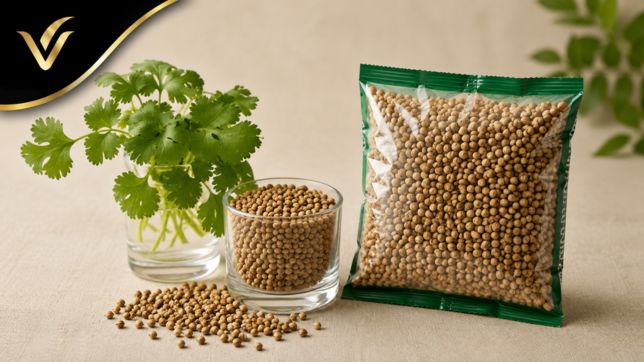
Few herbs have a personality as divided as Koriandri. To some people, its fresh green leaves are bright, citrusy, refreshing, and indispensable. To others, the same leaves can taste intensely soapy, metallic, or unpleasant. Yet beyond this famous culinary disagreement lies a plant with an extraordinary history, a complex chemistry, and a remarkable ability to move between cuisines.
Scientifically known as Coriandrum sativum, coriander is an annual herb belonging to the Apiaceae family. The plant is closely related to other aromatic plants such as parsley, carrots, celery, fennel, and cumin. What makes coriander especially interesting is that almost every part of the plant can be used. Its leaves, stems, roots, flowers, and dried fruits—commonly called seeds—can all contribute to food in different ways.
The leaves are generally called cilantro in North American English, while “coriander” commonly refers to the dried fruits or seeds. In Britain and many other parts of the world, however, coriander can refer to both the fresh herb and the dried spice. This naming difference can sometimes create confusion, but the botanical identity remains the same: Coriandrum sativum.
Koriandri is more than a garnish. It is a plant whose chemistry explains its distinctive aroma, whose genetics may help explain why people experience its flavor differently, and whose seeds have become important ingredients in cuisines stretching from South Asia to the Mediterranean and Latin America.
What Is Koriandri?
Koriandri is the botanical species Coriandrum sativum, an aromatic annual herb cultivated and used by humans for centuries. It belongs to the Apiaceae family, a large botanical group that includes many familiar culinary plants.
The plant typically develops delicate, bright-green foliage when young. As it matures, it produces small white or pale pink flowers arranged in characteristic umbrella-shaped clusters. After flowering, the plant develops rounded fruits that dry into what cooks commonly call coriander seeds.
Although the leaves and seeds come from the same plant, they do not taste alike. This is one of the most fascinating features of coriander.
Fresh leaves contain volatile compounds that create a sharp, green, citrus-like aroma. Dried seeds develop an entirely different aromatic profile, becoming warmer, earthier, nuttier, and slightly sweet. The transformation demonstrates how dramatically different plant parts—and even the same plant at different stages—can behave in cooking.
Modern reviews describe Coriandrum sativum as both a culinary herb and a source of numerous bioactive compounds, including essential oils, phenolic compounds, phytosterols, and terpenes.
The Botanical Identity of Koriandri
Understanding Koriandri begins with its scientific classification.
- Scientific name: Coriandrum sativum
- Family: Apiaceae
- Plant type: Annual herb
- Common names: Coriander, cilantro
- Commonly used parts: Leaves, stems, roots, flowers, and dried fruits
- Major culinary forms: Fresh leaves and dried coriander seeds
The word “seed” itself deserves a small clarification. Botanically, what cooks call coriander seeds are actually dried fruits containing the plant’s seeds. Nevertheless, “coriander seed” is the standard culinary term.
The plant’s adaptability has helped it become established in many agricultural regions. Today, coriander is cultivated widely and appears in traditional food cultures across several continents.
Its popularity is not surprising. A small quantity can dramatically change the aroma of a dish, while the dried spice can provide warmth and depth without overwhelming other ingredients.
Why Does Koriandri Taste Like Soap to Some People?
Perhaps the most famous scientific mystery surrounding Koriandri is its ability to divide human taste preferences.
Some people describe fresh coriander leaves as lemony, grassy, bright, or refreshing. Others describe almost the opposite experience: soap, detergent, dirt, or something chemically unpleasant.
This difference is not simply imagined.
Research has identified a genetic component associated with cilantro’s soapy perception. A 2012 genome-wide association study found an association between cilantro’s soapy taste and a genetic variant near a cluster of olfactory receptor genes on chromosome 11. One particularly interesting candidate is OR6A2, an olfactory receptor capable of detecting aldehydes associated with cilantro’s characteristic aroma.
The important point is that OR6A2 should not be described as a simple “cilantro hate gene.” Human flavor perception is much more complicated than a single gene. Genetics can influence sensitivity to particular aromatic molecules, but experience, culture, exposure, and individual sensory biology also matter.
23andMe research similarly found genetic markers associated with cilantro aversion and explained that some olfactory receptors detect aldehydes found in cilantro and soap-like aromas.
So when someone says, “Coriander tastes like soap,” they may genuinely be experiencing a different sensory balance from someone who tastes lemony freshness.
The Chemistry Behind the Flavor
The disagreement over coriander becomes easier to understand when its chemistry is considered.
Fresh coriander leaves contain numerous volatile compounds. Among the most important are aldehydes and other aromatic molecules. Some aldehydes contribute fresh, green, citrus-like characteristics, while others can be perceived as pungent or soapy.
This is why the herb can smell completely different depending on the individual experiencing it.
The 2012 genetic research noted that several aldehydes contribute to cilantro’s characteristic aroma and that OR6A2 is a compelling candidate receptor because it can detect aldehydes associated with the herb.
Interestingly, cooking can also change the sensory experience. Heat alters volatile compounds, which means coriander added raw at the end of a dish can taste much more intense than coriander cooked into the food.
This difference explains why someone who dislikes raw coriander may sometimes tolerate it in cooked sauces, soups, or stews.
Fresh Leaves and Dried Seeds Are Almost Two Different Spices
One of the best ways to understand Koriandri is to stop thinking of its leaves and seeds as interchangeable ingredients.
Fresh Coriander Leaves
Fresh leaves are delicate and aromatic. They are often added near the end of cooking or used as a finishing herb.
Their flavor can provide contrast to rich, spicy, salty, or fatty foods. A handful of chopped leaves can make a heavy curry taste fresher, while a small amount can brighten a bowl of soup or a salsa.
Because their volatile compounds are easily lost or transformed by prolonged heat, fresh coriander is frequently added shortly before serving.
Coriander Seeds
Dried coriander seeds have a completely different personality.
Their aroma is warm, slightly sweet, earthy, nutty, and citrus-like. Toasting them briefly in a dry pan can intensify their fragrance before they are ground or added to a recipe.
The seeds are especially important in spice mixtures, pickles, curries, marinades, sausages, breads, and roasted foods.
The chemistry of coriander seed oil is particularly interesting because linalool is one of its major components. Scientific reviews have repeatedly identified linalool and other terpenes as important contributors to coriander’s aroma and biological activity.
Koriandri in Mediterranean Cuisine
Coriander has a long association with Mediterranean and Middle Eastern cooking.
The dried seeds can provide warmth to meat preparations, vegetable dishes, breads, soups, and spice blends. In some traditional recipes, coriander is paired with cumin, garlic, chili, or other aromatic ingredients.
Its slightly citrus-like character can also balance heavier foods.
In Middle Eastern spice traditions, coriander may appear in blends alongside cumin, pepper, cinnamon, cardamom, or other spices. The exact combinations vary greatly from one region to another.
This versatility is one reason coriander has survived as a culinary ingredient across generations. It does not belong to one particular national cuisine. Instead, it has become part of a shared international vocabulary of flavor.
Koriandri in South Asian Cooking
South Asian cuisine demonstrates perhaps one of the most extensive uses of coriander.
Fresh coriander leaves appear in chutneys, curries, dals, rice dishes, snacks, salads, and sauces. They may be mixed with mint, green chili, lemon, ginger, garlic, or yogurt to create intensely aromatic accompaniments.
The dried seeds are equally important.
Ground coriander is a foundational spice in many curry powders and masala preparations. It provides body and warmth while helping connect sharper ingredients such as chili, turmeric, and ginger.
In many recipes, coriander powder is not intended to dominate the dish. Instead, it creates a background layer that allows other spices to become more rounded.
Whole coriander seeds can also be roasted before grinding. This simple step releases aromatic oils and creates a deeper, more complex flavor.
Koriandri in Mexican and Latin American Food
Fresh coriander leaves have become strongly associated with Mexican and broader Latin American cuisine.
They are commonly used in salsas, guacamole, tacos, soups, rice dishes, beans, and meat preparations. The herb’s fresh character works especially well with lime, chili, tomato, onion, and avocado.
Consider the relationship between coriander and lime. Both contribute a bright aromatic quality, but they do it through different chemical pathways. Together, they can make a dish taste more vibrant.
This is one reason fresh coriander is so effective as a finishing herb.
It does not necessarily need to be the main flavor. Instead, it can function like a final brushstroke that lifts the entire plate.
Koriandri in Thai and Southeast Asian Cuisine
Fresh coriander also plays an important role in Southeast Asian cooking.
Leaves and stems may be incorporated into curries, soups, salads, sauces, and herb-heavy preparations. In some culinary traditions, roots are also valued for their concentrated aroma.
Coriander’s fresh flavor works naturally with ingredients such as chili, lime, garlic, ginger, fish sauce, coconut milk, and lemongrass.
This combination illustrates an important culinary principle: aromatic herbs can provide contrast as well as flavor.
A rich coconut-based curry may feel heavy on its own. Add fresh herbs, acidic ingredients, and chili, and the same dish can suddenly seem lighter and more complex.
Koriandri in Baking
The dried seeds are not restricted to savory cooking.
Ground coriander has long appeared in European baking, including breads, pastries, biscuits, and gingerbread-style preparations. Its warm citrus character can complement cinnamon, ginger, cloves, and other baking spices.
In bread, coriander can provide a subtle aromatic quality without requiring large quantities.
This is another example of why Koriandri should not be classified simply as a curry spice. Its flavor profile is broad enough to work in sweet and savory foods.
Koriandri as a Spice-Blend Essential
Spice blends are where coriander seeds demonstrate their greatest versatility.
Ground coriander is often combined with cumin and other spices to create balanced seasoning mixtures. It appears in or contributes to various regional spice traditions, including blends associated with South Asian, Middle Eastern, and North African cooking.
The reason is partly chemical and partly culinary.
Coriander has enough warmth to connect earthy spices, enough aromatic brightness to prevent heaviness, and enough subtle sweetness to soften sharper ingredients.
Rather than competing with every other spice, it frequently acts as a bridge.
The Nutritional Side of Koriandri
Coriander is also valued for its nutritional components.
Fresh leaves contain vitamins, minerals, carotenoids, phenolic compounds, and other plant-derived substances. The exact nutritional contribution depends heavily on portion size and whether someone is eating a small garnish or a substantial quantity.
Vitamin K is particularly relevant in fresh leafy coriander. The plant also provides vitamin C and minerals, although coriander should be considered one component of a varied diet rather than a single source capable of meeting all nutritional requirements.
Scientific reviews describe coriander leaves and seeds as containing a wide range of potentially beneficial compounds, including vitamins, polyphenols, phytosterols, fatty acids, and essential-oil constituents.
The most interesting nutritional story, however, may not be about one vitamin. It is about the combination of numerous plant compounds.
Digestive Health and Traditional Uses
Coriander has a long history in traditional approaches to digestive health.
Its seeds have traditionally been used for complaints such as indigestion, flatulence, and stomach discomfort. Modern reviews continue to discuss coriander’s carminative and digestive properties, although traditional use should not automatically be interpreted as proof of clinical effectiveness.
The term “carminative” refers broadly to substances traditionally used to help relieve gas and digestive discomfort.
Coriander’s aromatic oils may partly explain why it has historically been associated with digestion. Essential-oil research has identified compounds with biological activities that may interact with digestive processes, although the strength of evidence varies according to the preparation and the condition being studied.
For everyday cooking, the practical message is simple: coriander can be part of a flavorful, plant-rich diet, but it should not be treated as a replacement for medical treatment.
Coriander and Blood Sugar Research
Another area attracting scientific interest is metabolic health.
Experimental studies have reported possible blood-glucose-lowering effects from coriander preparations. Some human research has also investigated coriander seed powder and related preparations in people with metabolic conditions.
However, evidence must be interpreted carefully.
A substantial proportion of the research literature involves animal experiments, laboratory studies, extracts, or relatively small human trials. A review of cardiovascular effects specifically noted that most included studies were in vivo, with comparatively few clinical studies, and called for further clinical research.
That means coriander is promising as a research subject, but it should not be presented as a proven treatment for diabetes.
The sensible role of coriander is as a flavorful herb or spice that can help people build varied, vegetable-rich meals without relying heavily on salt or highly processed flavorings.
Coriander and Cholesterol
Coriander has also attracted attention for its potential effects on blood lipids.
Research has investigated whether coriander seeds or extracts may influence cholesterol and triglyceride levels. Some animal studies have reported reductions in lipid measures, while reviews have proposed several possible mechanisms involving phytosterols, polyphenols, lipid metabolism, and bile-acid pathways.
There has also been human research exploring coriander preparations in metabolic populations.
Still, this evidence should not be exaggerated. The existence of a biological mechanism or positive animal experiment does not mean that eating coriander will produce a predictable cholesterol reduction in every person.
Dietary patterns matter far more than any single herb.
Coriander can contribute to a healthy eating pattern, but it is not a substitute for prescribed cholesterol treatment, exercise, or an overall balanced diet.
Antioxidant Potential
Plants produce numerous compounds that help protect themselves from environmental stress. Some of these compounds also have antioxidant properties when studied in laboratory systems.
Coriander contains phenolic compounds, flavonoids, vitamins, and other constituents associated with antioxidant activity. Reviews have documented antioxidant effects in extracts and essential oils.
But there is an important distinction between antioxidant activity in a laboratory experiment and a proven health outcome in humans.
An extract may behave differently from fresh coriander eaten as part of a meal. Concentration, preparation, digestion, absorption, metabolism, and dosage all influence what happens inside the body.
Therefore, coriander’s antioxidant potential is scientifically interesting, but it should be discussed as an area of research rather than a guaranteed medical benefit.
Antimicrobial Properties
Coriander essential oil has demonstrated antimicrobial activity in laboratory research.
Scientists have investigated coriander oils and extracts against bacteria, fungi, and other microorganisms. These effects are thought to be associated with volatile compounds and other phytochemicals.
This has attracted interest in food preservation and natural antimicrobial applications.
However, laboratory antimicrobial activity does not mean that eating coriander will sterilize the body or cure an infection.
That distinction is important. Food can contain biologically active compounds without functioning as a medicine.
The future may involve coriander-derived compounds in food preservation, agriculture, cosmetics, or pharmaceutical research, but these applications require appropriate testing and formulation.
The “Detox” Question
Coriander is sometimes promoted online as a natural detoxification herb, particularly in discussions about heavy metals.
There is scientific interest in the possibility that coriander extracts may interact with certain metals. Reviews have reported experimental findings involving lead and other toxic substances.
But “detox” is a word that can easily become misleading.
The human body already has sophisticated systems for processing and eliminating many substances, particularly through the liver and kidneys. Evidence from animal models or laboratory experiments does not automatically prove that eating fresh coriander will remove dangerous levels of heavy metals from a person’s body.
Anyone exposed to heavy metals should seek appropriate medical or occupational-health evaluation rather than relying on herbs.
Coriander can be part of a healthy diet, but it should not be marketed as a replacement for evidence-based treatment of poisoning.
How to Get the Best Flavor from Coriander Seeds
Using coriander seeds correctly can make a dramatic difference.
Whole seeds generally retain their aroma better than ground coriander because grinding increases the surface area exposed to air.
For maximum flavor, cooks can toast whole coriander seeds briefly in a dry pan over moderate heat. The process releases aromatic compounds and creates a deeper fragrance.
The seeds should be watched carefully because they can burn quickly.
Once toasted, they can be crushed using a mortar and pestle, spice grinder, or other suitable kitchen tool.
Freshly ground coriander usually has a more vivid aroma than an old jar of powdered spice that has been sitting in a cupboard for months.
How to Store Fresh Koriandri
Fresh coriander is delicate and loses quality faster than dried spices.
The leaves should be kept cool and protected from excessive moisture. Removing damaged leaves and storing the herb appropriately can help preserve freshness.
Because coriander leaves contain volatile aromatic compounds, they are best used while fresh.
Freezing is another option when someone has more coriander than they can use immediately. Frozen coriander may lose some of its crisp texture, but it can remain useful for cooked dishes, sauces, soups, and chutneys.
Growing Koriandri at Home
Coriander can also be grown in a home garden or container.
It generally prefers a sunny position and well-drained soil. One challenge is that coriander can bolt relatively quickly, particularly in warm conditions or when stressed.
Bolting means the plant shifts toward flowering and seed production.
For people who primarily want fresh leaves, succession sowing can be useful. Instead of planting everything at once, gardeners can sow smaller quantities at intervals.
For those interested in coriander seeds, allowing the plant to flower and produce mature fruits provides a completely different gardening experience.
The same plant can therefore serve two purposes: harvesting young leaves for freshness and allowing later growth to produce aromatic seeds.
Why Koriandri Matters Beyond the Kitchen
The story of Koriandri is ultimately larger than a simple ingredient list.
It connects botany, genetics, chemistry, agriculture, culture, nutrition, and human perception.
A single herb can taste refreshing to one person and unpleasant to another because their sensory systems respond differently to the same molecules.
The same plant can produce delicate green leaves and warm aromatic seeds.
It can appear in Mexican salsa, Indian chutney, Middle Eastern spice blends, European bread, Thai curry, and countless home kitchens around the world.
Its chemical compounds can also become subjects of research into antioxidant, antimicrobial, metabolic, cardiovascular, and other biological effects.
That combination of everyday familiarity and scientific complexity makes coriander unusually fascinating.
Koriandri and the Future of Food Research
Research into Coriandrum sativum is unlikely to stop with traditional culinary use.
Scientists continue investigating its essential oils, polyphenols, flavonoids, phytosterols, and terpenes. Recent reviews describe a broad range of potential biological activities while also emphasizing the need for additional research, especially stronger clinical evidence.
Future studies may help determine which compounds are most important, how preparation changes their activity, and whether specific coriander components have useful applications in food science or medicine.
This is particularly interesting because coriander is already widely consumed.
Unlike an obscure laboratory plant, it has a long culinary history and established agricultural systems. That makes it an attractive candidate for research into functional foods.
Still, scientific enthusiasm must remain balanced. “Potential” is not the same as “proven,” and laboratory findings should not be turned into exaggerated health promises.
The Cultural Power of a Small Herb
Perhaps the most remarkable thing about Koriandri is how much cultural meaning can fit into a small handful of leaves.
In one kitchen, coriander may represent the finishing touch to a family curry. In another, it may be the defining aroma of salsa. Somewhere else, its seeds may be toasted and ground into a spice mixture.
And in another kitchen, someone may carefully remove every leaf because the herb tastes like soap.
All of these experiences can coexist.
Food is not merely chemistry. It is memory, culture, biology, expectation, and personal history. Coriander demonstrates this beautifully because its flavor can be interpreted so differently by different people.
Final Thoughts
Koriandri, or Coriandrum sativum, is one of the world’s most versatile culinary herbs. Its fresh leaves provide a sharp, green, citrus-like character, while its dried seeds offer warmth, nuttiness, earthiness, and gentle sweetness.
Its uses stretch across continents, from chutneys and curries to salsa, spice blends, breads, soups, pickles, and sauces.
Its biology is equally compelling. Genetic research has linked differences in cilantro perception with olfactory receptor genes, including the candidate receptor OR6A2, helping explain why the same herb can taste fresh to one person and remarkably soapy to another.
The plant also contains numerous bioactive compounds that have been studied for antioxidant, antimicrobial, digestive, cardiovascular, lipid-related, and metabolic effects. Yet the scientific evidence varies, and many findings still come from laboratory or animal research rather than large, definitive clinical trials.
That balance is what makes Koriandri worth appreciating.
It is not simply a garnish. It is not a miracle medicine. It is not merely a spice.
It is a botanical species with an unusually rich culinary identity and a fascinating relationship with human perception.
From a small green leaf to a fragrant toasted seed, Koriandri demonstrates how one plant can offer completely different experiences depending on which part is used, how it is prepared, and even who is doing the tasting.
In the end, perhaps the best definition of Koriandri is also the simplest: one plant, many flavors, countless cultures, and a surprisingly deep scientific story.
Frequently Asked Questions About Koriandri
1. What is Koriandri?
Koriandri is the botanical species Coriandrum sativum, commonly known as coriander. Its fresh leaves are often called cilantro, while its dried fruits are commonly called coriander seeds.
2. Why does Koriandri taste like soap to some people?
Some people have genetic variations involving olfactory receptor genes, particularly OR6A2, that may make them more sensitive to aldehydes found in fresh coriander leaves. As a result, they may perceive the herb as soapy or unpleasant.
3. What is the difference between coriander leaves and coriander seeds?
Fresh coriander leaves have a bright, green, citrus-like flavor, while dried coriander seeds have a warmer, earthy, nutty, and slightly sweet flavor. The two forms are used differently in cooking.
4. What foods can Koriandri be used in?
Koriandri is used in curries, chutneys, salsas, guacamole, soups, salads, marinades, pickles, spice blends, breads, and many other dishes. It is especially common in South Asian, Middle Eastern, Mediterranean, Latin American, and Southeast Asian cuisines.
5. Does Koriandri have nutritional benefits?
Yes. Fresh coriander provides nutrients such as vitamin K and vitamin C, along with minerals and various plant compounds. Its overall nutritional contribution depends on the amount consumed.
6. Can Koriandri support digestion?
Coriander has traditionally been used as a carminative herb for digestive discomfort and bloating. Some research supports biological activity related to digestion, although more human clinical research is needed.
7. Can Koriandri help control blood sugar?
Research has investigated coriander’s potential effects on blood glucose, with promising findings in some laboratory and animal studies. However, it should not be considered a replacement for prescribed diabetes treatment or medical advice.
8. Can Koriandri help with cholesterol?
Some studies suggest that coriander preparations may influence cholesterol and other blood-lipid measurements. However, much of the evidence is experimental, so more high-quality human research is needed before making firm health claims.
9. Does Koriandri have antimicrobial properties?
Coriander essential oils and extracts have demonstrated antimicrobial activity in laboratory studies. These findings are interesting for food science and research, but they do not mean that eating coriander can treat an infection.
10. Is Koriandri a natural detox ingredient?
Coriander has been investigated for possible interactions with certain heavy metals, but claims that eating coriander can broadly “detox” the body are not firmly established. Heavy-metal exposure requires proper medical assessment and treatment.
11. How should coriander seeds be prepared for maximum flavor?
Whole coriander seeds can be lightly dry-roasted in a pan until fragrant and then ground. Toasting helps release their aromatic oils and creates a deeper, warmer flavor.
12. Can Koriandri be grown at home?
Yes. Coriander can be grown in gardens and containers. It generally prefers sunlight and well-drained soil, although warm conditions can cause it to bolt and flower quickly.
13. Is Koriandri the same as cilantro?
Yes. Both cilantro and coriander come from Coriandrum sativum. In North American usage, “cilantro” usually means the fresh leaves, while “coriander” usually means the dried fruits or seeds. In British English, “coriander” commonly refers to both.
14. Why is Koriandri so popular around the world?
Its versatility is a major reason. The fresh leaves add brightness to dishes, while the dried seeds contribute warmth and depth. This allows the same plant to play different roles in cuisines across Europe, Asia, Africa, the Middle East, and the Americas.