Introduction:
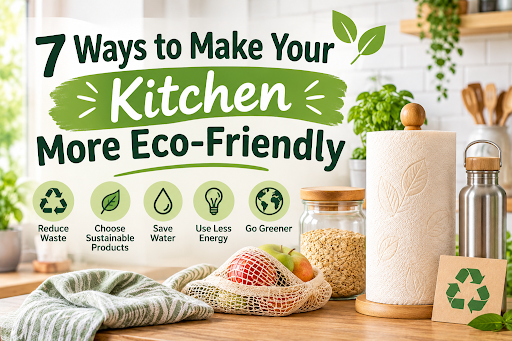
A kitchen is one of the busiest areas of any home. From preparing meals and washing dishes to cleaning surfaces and storing groceries, everyday kitchen activities can generate considerable household waste. Single-use packaging, disposable paper products, excessive water consumption and food waste can all contribute to a home’s environmental footprint.
Creating an eco-friendly kitchen does not require a complete renovation or expensive lifestyle changes. Instead, we can make practical improvements by choosing reusable products, reducing unnecessary packaging, conserving resources and making more thoughtful purchasing decisions.
Sustainable kitchen habits also offer everyday benefits. They can help reduce household waste, encourage responsible consumption and create a cleaner, more organised cooking environment. By making small changes consistently, we can build a kitchen that supports both modern household needs and environmental responsibility.
Here are seven practical ways to make our kitchens more sustainable.
1. Switch to Bamboo Kitchen Rolls
Kitchen rolls are useful for wiping worktops, cleaning spills, drying surfaces and dealing with everyday household mess. However, relying heavily on disposable paper products can increase household waste, particularly when they are used for tasks that reusable alternatives could handle.
One practical change is switching to bamboo kitchen rolls. Bamboo is a fast-growing plant that can regenerate after harvesting, making it an interesting alternative material for household paper products. However, the overall environmental impact still depends on responsible cultivation, manufacturing processes, processing methods and packaging.
Bamboo kitchen rolls provide a convenient option for everyday cleaning tasks, including:
- Wiping spills: Quickly absorb water, juice and other liquid spills from kitchen surfaces.
- Cleaning worktops: Remove food residue and everyday dirt from preparation areas.
- Drying surfaces: Help dry kitchen counters, sinks and other household surfaces.
- Handling food preparation mess: Clean up small splashes and mess created during cooking.
- General household cleaning: Support quick cleaning jobs without reaching for larger cleaning materials.
When choosing an eco-friendly kitchen roll, we should consider its strength, absorbency, softness, sheet quality and packaging. Products with responsibly sourced materials and minimal plastic packaging can also support more sustainable purchasing decisions.
We can explore different options of bamboo kitchen rolls when looking for a practical alternative to conventional kitchen paper.
For the best results, we can combine bamboo kitchen rolls with washable cleaning cloths. This approach allows us to use disposable sheets when necessary while relying on reusable materials for routine cleaning.
2. Reduce Single-Use Plastic Packaging
Plastic packaging is common in everyday grocery shopping. From food wrappers and disposable bags to plastic bottles and takeaway containers, unnecessary packaging can quickly accumulate in household bins.
Creating a plastic free kitchen does not mean eliminating every plastic item immediately. Instead, we can gradually reduce disposable packaging by choosing reusable alternatives.
Here are some practical changes:
- Use reusable shopping bags instead of disposable carrier bags.
- Store dry ingredients in glass jars or durable containers.
- Choose loose fruit and vegetables when practical.
- Replace disposable sandwich bags with reusable food storage options.
- Purchase refillable washing-up liquid and cleaning products.
- Use reusable water bottles instead of single-use bottled water.
Glass, stainless steel and suitable food-grade containers can provide durable storage options. However, we should choose materials according to their intended use, cleaning requirements and longevity.
We should also avoid replacing perfectly functional household products unnecessarily. Using existing items for longer is often a more sensible approach than buying new alternatives simply because they are marketed as sustainable.
3. Choose Reusable Kitchen Cleaning Products
Cleaning is an essential part of maintaining a hygienic kitchen, but it does not always require disposable products.
Many everyday cleaning tasks can be completed using washable and reusable materials. Microfibre cloths, cotton cleaning cloths, reusable dishcloths and durable cleaning brushes can reduce our dependence on disposable wipes and paper towels.
We can introduce several simple alternatives:
Washable cleaning cloths: These are useful for cleaning worktops, cupboards, dining tables and kitchen appliances. We can wash and reuse them according to their care instructions.
Reusable dishcloths: These provide a practical option for wiping dishes, cleaning sinks and removing food residue.
Durable washing-up brushes: Brushes with replaceable heads can reduce the need to discard an entire cleaning tool when its bristles wear out.
Reusable cleaning pads: Washable pads can handle various cleaning tasks and help reduce disposable cleaning waste.
To maintain good hygiene, we should wash reusable cleaning materials regularly and allow them to dry completely between uses. Separate cloths should be used for food preparation areas, general surfaces and potentially contaminated areas.
Choosing durable cleaning products that last can make everyday kitchen maintenance more efficient while supporting a more sustainable routine.
4. Reduce Food Waste Through Better Planning
Food waste is another important issue when creating an eco-friendly kitchen. Buying more groceries than we need, forgetting ingredients at the back of cupboards and allowing fresh produce to spoil can result in unnecessary waste.
We can reduce food waste by improving how we plan meals, purchase groceries and store ingredients.
Plan meals before shopping
Creating a weekly meal plan helps us understand which ingredients we actually need. Before visiting the supermarket, we should check existing cupboards, refrigerators and freezers to avoid purchasing duplicate products.
Store food correctly
Different foods require different storage conditions. Some vegetables benefit from refrigeration, while certain fruits and vegetables are better stored in cool, dry places. Following appropriate storage guidance can help maintain freshness.
Use leftovers creatively
Leftover vegetables can become soups, sauces or fillings. Cooked rice, potatoes and other ingredients can also be incorporated into suitable meals when stored and reheated safely.
Understand food date labels
We should distinguish between use-by and best-before dates. Use-by dates relate to food safety, while best-before dates generally concern quality. Always follow appropriate food safety guidance when handling and storing leftovers.
By making better purchasing and storage decisions, we can reduce kitchen waste, make groceries go further and avoid unnecessary spending.
5. Choose Eco-Friendly Cleaning Products
Conventional kitchen cleaning products can contain different chemicals, fragrances and packaging materials. When choosing alternatives, we should look beyond marketing terms and consider the ingredients, product instructions and environmental information provided by manufacturers.
Eco friendly cleaning products can be a useful addition to a sustainable kitchen when they offer transparent formulations, appropriate environmental credentials and responsible packaging.
Consider the following options:
- Choose cleaning products with clearly disclosed ingredients.
- Look for independently verified environmental certifications where available.
- Consider refillable bottles and concentrated cleaning solutions.
- Choose products with recyclable or reduced packaging.
- Purchase suitable multipurpose cleaners to avoid unnecessary product duplication.
Biodegradable ingredients may offer environmental benefits under appropriate conditions, but biodegradability depends on the formulation and disposal environment. We should therefore avoid assuming that every product labelled natural or eco-friendly is automatically harmless.
We should also follow manufacturers’ instructions and never mix household cleaning chemicals, particularly bleach with acidic cleaners or ammonia-based products.
Making informed choices allows us to maintain a clean kitchen without purchasing unnecessary products or relying entirely on disposable cleaning materials.
6. Save Water and Energy in the Kitchen
Water and electricity are essential resources in everyday kitchen activities. Washing dishes, boiling kettles, operating refrigerators and using ovens all contribute to household resource consumption.
Fortunately, several small changes can help us use these resources more efficiently.
Use water more carefully
Avoid leaving taps running while washing vegetables or cleaning dishes. We can use a washing-up bowl when appropriate and run dishwashers with full loads rather than repeatedly washing small quantities.
Improve cooking efficiency
Using appropriately sized pans and matching them to the correct hob rings can help reduce wasted heat. Keeping lids on saucepans also helps retain heat and moisture during cooking.
Boil only the water we need
Overfilling the kettle means heating more water than necessary. Measuring the required amount before switching it on is a simple way to avoid unnecessary energy use.
Maintain kitchen appliances
Cleaning refrigerator coils where manufacturer guidance permits, checking door seals and maintaining appropriate appliance temperatures can support efficient operation.
Choose efficient appliances
When replacing kitchen appliances, consider their energy labels, capacity, expected lifespan and operating requirements. A suitable energy-efficient model can help reduce electricity consumption over time.
These sustainable kitchen ideas are relatively easy to introduce and can also help households manage utility costs.
7. Choose Sustainable Kitchen Essentials
Creating an eco-friendly kitchen is not just about changing cleaning habits. The everyday products we purchase, use and eventually discard also matter.
Instead of choosing disposable or low-quality products, we should prioritise durable household essentials that can serve their purpose for longer.
Some useful sustainable kitchen products include:
- Stainless steel lunch boxes: Reusable containers for storing and transporting meals.
- Glass food storage jars: Suitable for keeping dry ingredients organised.
- Reusable shopping bags: A practical alternative to disposable carrier bags.
- Wooden kitchen utensils: Durable tools made from responsibly sourced wood.
- Reusable food wraps: Alternatives to some disposable food storage materials.
- Refillable dispensers: Useful for washing-up liquid and other household cleaning products.
- Long-lasting cleaning brushes: Products with replaceable components where available.
When purchasing these items, we should consider material quality, manufacturing information, packaging, maintenance requirements and product lifespan.
Not every product labelled sustainable is necessarily the best environmental choice. For example, a reusable item needs to be used enough times to justify the resources involved in manufacturing it.
Therefore, we should focus on buying fewer, better-quality products and making full use of the items we already own.
Conclusion: Build a More Sustainable and Eco-Friendly Kitchen
Creating an eco-friendly kitchen is about making better everyday decisions rather than changing everything at once. From switching to bamboo kitchen rolls and reducing plastic packaging to choosing reusable cleaning materials and managing food waste, small improvements can make household routines more sustainable.
We can also save water and energy by changing how we cook, clean and use kitchen appliances. Choosing durable essentials and responsibly sourced materials further supports a more thoughtful approach to household consumption.
The most effective sustainable kitchen habits are those we can maintain over time. By introducing practical changes gradually, we can reduce unnecessary waste, use household resources more efficiently and create a cleaner, more environmentally conscious home.
A sustainable kitchen does not need to be complicated. It starts with the everyday choices we make and the products we choose to bring into our homes.