Shoshana Clark, also known as Shoshana Clark Stewart, is an American nonprofit executive whose career has combined education, international development, cultural preservation, and humanitarian work. As President and CEO of Turquoise Mountain, an international nongovernmental organization focused on heritage preservation and artisan communities, she has played an important role in restoring historic places and creating opportunities for craftspeople in regions affected by conflict.
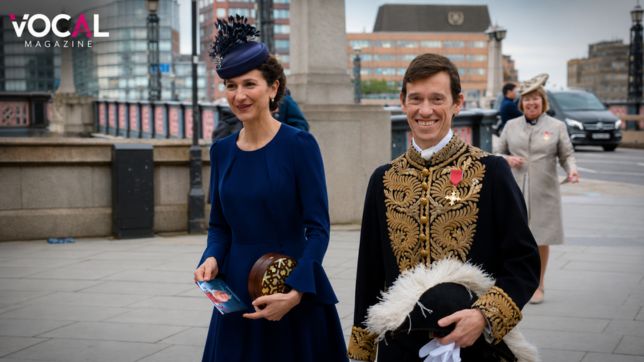
Born in August 1980, Clark has also attracted public attention through her marriage to Rory Stewart, the British diplomat, author, podcaster, and former Conservative politician. However, her professional achievements extend well beyond her family connections. Her work with Turquoise Mountain has taken her from volunteering in Kabul to leading major heritage and economic-development projects across several countries.
Early Life and Education
Shoshana Clark’s educational background is unusual for someone who eventually became a leader in the international nonprofit sector. She graduated from Williams College in 2002 with an undergraduate degree in astrophysics. Her academic training in a highly analytical scientific field gave her a strong foundation in problem-solving and disciplined thinking.
While studying at Williams, Clark was also a successful athlete. She captained the college rowing team and helped lead it to three national championships. The experience required teamwork, endurance, leadership, and the ability to perform under pressure—qualities that would later prove valuable in her international career.
After completing her undergraduate studies, Clark continued her education at London Business School, where she earned an MBA. The combination of scientific education and business training provided her with an unusual professional profile, allowing her to approach nonprofit challenges with both analytical and organizational perspectives.
Before fully entering the nonprofit world, Clark also worked as a school teacher in the United States and the United Kingdom. Teaching gave her experience in communication, mentoring, and working directly with communities.
Discovering a Mission in Afghanistan
Clark’s connection to Afghanistan became a defining part of her professional life. She became involved with Turquoise Mountain as a volunteer intern in Kabul soon after the organization was founded.
Turquoise Mountain was established with the goal of helping revive Afghanistan’s historic and cultural heritage while supporting local communities and artisans. The organization focused on the idea that cultural preservation could also become a pathway toward economic opportunity and social recovery.
Clark’s early role as an intern eventually developed into a much larger leadership position. Her commitment to the organization’s mission and her ability to manage complex projects helped her rise through its ranks.
Her experience in Afghanistan exposed her to the practical difficulties of working in areas affected by conflict. Rather than viewing heritage preservation as simply an artistic exercise, Clark’s approach connected historic buildings, traditional crafts, employment, education, and community development.
Leadership at Turquoise Mountain
As President and CEO of Turquoise Mountain, Clark became responsible for guiding an organization operating in some of the world’s most challenging environments.
One of the organization’s notable achievements under her leadership was the removal of approximately 30,000 cubic meters of rubble from Kabul’s old city. The project was part of a broader effort to restore historic areas and protect Afghanistan’s architectural heritage.
Turquoise Mountain also helped restore more than 150 historic properties. These projects demonstrated that damaged historic neighborhoods could be revitalized while preserving their cultural identity.
For Clark, heritage restoration was not simply about repairing old buildings. Historic neighborhoods can provide places where communities live, work, trade, and preserve traditional skills. Restoring those environments therefore has the potential to support both cultural continuity and economic activity.
Supporting Afghan Artisans
Another major part of Clark’s work has been the development of artisan communities.
Afghanistan has a long tradition of craftsmanship, including woodworking, jewelry, ceramics, embroidery, carpet-making, and other forms of traditional art. Conflict, economic instability, and changing markets can place these traditions under significant pressure.
Turquoise Mountain sought to address these challenges by training craftspeople and helping them connect with international markets. Under Clark’s leadership, the organization expanded programs designed to give artisans professional skills while preserving traditional techniques.
Afghan art supported through the organization’s programs has been exhibited at major international venues, including the Smithsonian. Such exhibitions helped introduce Afghan craftsmanship to audiences outside the country and demonstrated the cultural value of traditions that might otherwise struggle to survive.
Expansion Beyond Afghanistan
Although Afghanistan remained central to Turquoise Mountain’s identity, Clark helped expand the organization’s work into other regions.
The organization developed major cultural restoration and artisan-development projects in Myanmar, Saudi Arabia, and the Levant. This expansion reflected a broader understanding of the relationship between cultural heritage and community development.
Historic sites can represent much more than monuments. They can provide employment, tourism opportunities, educational resources, and a sense of identity for local communities. By combining preservation with economic development, Turquoise Mountain has sought to create projects that benefit both heritage and people.
Clark’s international leadership therefore involves navigating different cultures, political environments, economic conditions, and conservation requirements. Her role requires balancing long-term cultural objectives with the practical needs of communities.
Responding to Crisis in Kabul
One of the most significant tests of Clark’s leadership came in August 2021, when the Taliban recaptured Kabul.
The political transformation created enormous uncertainty for organizations working in Afghanistan. Many international institutions and foreign nationals left the country as security conditions changed.
Clark made the notable decision to keep Turquoise Mountain’s operations active and remained on the ground in Kabul after the Taliban takeover. Continuing work in such circumstances required careful risk management and a strong commitment to the organization’s local partners.
Her decision illustrated an important feature of her leadership philosophy: international development does not necessarily end when circumstances become difficult. For communities and artisans who depend on long-term relationships, continuity can be extremely important.
Recognition and the Williams College Bicentennial Medal
Clark’s contributions have received recognition beyond the nonprofit sector. In 2018, Williams College awarded her the Bicentennial Medal.
The honor recognized her accomplishments and impact in international cultural redevelopment. Receiving the medal from her alma mater was particularly meaningful given her earlier achievements at Williams as both a student and rowing captain.
Her journey from studying astrophysics to leading international heritage programs demonstrates how professional careers can evolve in unexpected directions. Clark’s story shows that technical education, leadership experience, business knowledge, and humanitarian interests can ultimately converge in a distinctive career.
Personal Life and Marriage to Rory Stewart
Shoshana Clark’s personal life has also attracted public interest because of her relationship with Rory Stewart.
Before marrying Stewart, Clark was married to anthropologist Noah Coburn, with whom she had volunteered in Afghanistan. Following that marriage’s end, she married Rory Stewart in 2012.
Stewart is known for his career as a British diplomat, writer, politician, and international development figure. His experiences in Afghanistan and other countries have frequently overlapped with Clark’s professional interests.
The couple have two children. Their family life has occasionally been mentioned in Stewart’s public interviews and writing. One particularly memorable family story concerns the birth of their eldest son in 2014, when Stewart unexpectedly had to deliver the baby himself on their bathroom floor following a very rapid labor.
Stewart has also described Clark as an important adviser and collaborator. Their shared experience of international affairs and humanitarian work has created a partnership extending beyond their private family life.
A Career Built Around Cultural Preservation
What makes Shoshana Clark’s career particularly interesting is the way several seemingly different fields have come together.
Her background in astrophysics might initially appear far removed from heritage preservation. Her MBA introduced business and organizational management, while her experience as a teacher developed communication and leadership skills. Her early volunteer work in Afghanistan then placed those abilities within an international humanitarian environment.
Over time, these experiences helped shape a career centered on cultural preservation and community development.
Clark’s work also challenges the idea that heritage protection is simply about preserving the past. In conflict-affected areas, historic buildings and traditional crafts can become tools for rebuilding communities. Restoring a workshop, training an artisan, or rehabilitating a historic neighborhood can have economic and social consequences far beyond the physical project itself.
Conclusion
Shoshana Clark represents a distinctive model of modern nonprofit leadership. From her education in astrophysics at Williams College to her MBA at London Business School, teaching experience, early volunteer work in Kabul, and eventual leadership of Turquoise Mountain, her career has followed an unconventional but meaningful path.
Through Turquoise Mountain, she has helped connect cultural heritage with economic opportunity, artisan training, historic restoration, and international cultural exchange. Her leadership has contributed to projects in Afghanistan and beyond, while her decision to continue working in Kabul during the upheaval of 2021 demonstrated a strong commitment to the communities served by the organization.
Although her marriage to Rory Stewart has brought additional public attention, Shoshana Clark’s own professional record stands on its own. Her story is ultimately one of leadership, resilience, cultural preservation, and the belief that protecting heritage can also help build stronger futures for communities.
FAQs About Shoshana Clark
Who is Shoshana Clark?
Shoshana Clark, also known as Shoshana Clark Stewart, is an American nonprofit executive and the President and CEO of Turquoise Mountain, an international organization focused on cultural heritage preservation and supporting artisan communities in conflict-affected regions.
When was Shoshana Clark born?
Shoshana Clark was born in August 1980.
What is Shoshana Clark’s educational background?
She earned an undergraduate degree in astrophysics from Williams College in 2002 and later completed an MBA at London Business School.
What did Shoshana Clark do before working in the nonprofit sector?
Before building her career in international development, Clark worked as a school teacher in both the United States and the United Kingdom.
What is Turquoise Mountain?
Turquoise Mountain is an international nongovernmental organization that works to preserve cultural heritage and support artisans and communities in areas affected by conflict and economic challenges.
How did Shoshana Clark become involved with Turquoise Mountain?
Clark initially joined Turquoise Mountain as a volunteer intern in Kabul, Afghanistan, shortly after the organization was established. She later advanced through the organization and eventually became its President and CEO.
What has Shoshana Clark achieved at Turquoise Mountain?
During her leadership, Turquoise Mountain has been involved in removing large quantities of rubble from Kabul’s old city, restoring historic properties, training artisans, and promoting Afghan craftsmanship internationally.
Did Shoshana Clark work only in Afghanistan?
No. Although Afghanistan has been an important part of her career, her work with Turquoise Mountain has expanded to regions including Myanmar, Saudi Arabia, and the Levant.
What award did Shoshana Clark receive?
In 2018, she received the Williams College Bicentennial Medal in recognition of her achievements and contributions to international cultural redevelopment.
Is Shoshana Clark married to Rory Stewart?
Yes. Shoshana Clark married Rory Stewart, the British diplomat, author, podcaster, and former Conservative politician, in 2012.
How many children do Shoshana Clark and Rory Stewart have?
Shoshana Clark and Rory Stewart have two children together.
Why is Shoshana Clark’s career notable?
Her career is notable because it combines science, education, business, humanitarian work, cultural preservation, and international development. Her leadership demonstrates how heritage restoration can be connected with artisan training and community development.
Did Shoshana Clark remain in Kabul after the Taliban takeover?
Yes. Following the Taliban’s recapture of Kabul in August 2021, Clark chose to remain involved with Turquoise Mountain’s operations and stayed on the ground in Kabul during a highly challenging period.