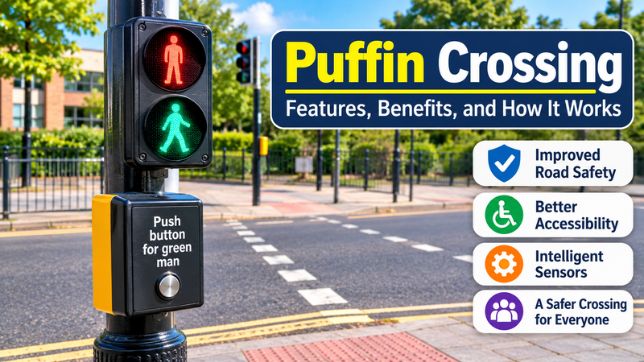
Road safety is an essential part of modern transportation, particularly in busy urban areas where pedestrians and vehicles share the same roads. Different types of pedestrian crossings have been introduced to make it easier and safer for people to cross streets. One important example in the United Kingdom is the Puffin Crossing, an intelligent pedestrian crossing system designed to improve safety and make crossing roads more convenient.
The term Puffin stands for Pedestrian User-Friendly Intelligent Crossing. It is a sensor-equipped, light-controlled pedestrian crossing that uses modern technology to detect pedestrians and adjust traffic signal timings accordingly. Unlike older crossing systems, a Puffin Crossing has pedestrian signals positioned on the same side of the road as the waiting pedestrian.
These crossings are designed to help pedestrians make safer decisions while allowing traffic to move efficiently. Their intelligent sensors, accessible features, and straightforward signal system make them a valuable part of modern road infrastructure.
What Is a Puffin Crossing?
A Puffin Crossing is a traffic-controlled pedestrian crossing commonly used in the United Kingdom. It is designed to provide a safe and convenient way for pedestrians to cross busy roads.
The crossing uses traffic lights, pedestrian signals, and electronic sensors to manage the movement of vehicles and people. When someone approaches the crossing, they can press a button to request permission to cross. Sensors then help detect whether pedestrians are waiting or still crossing the road.
One of the most recognizable features of a Puffin Crossing is its nearside pedestrian signal. Unlike traditional systems that display pedestrian lights on the opposite side of the road, Puffin signals are installed near the pedestrian control box. This allows people to monitor the signal while remaining aware of approaching traffic.
Puffin Crossings are particularly useful in busy streets, shopping areas, residential neighbourhoods, and locations where pedestrian safety is a priority.
How Does a Puffin Crossing Work?
A Puffin Crossing combines traffic signals and electronic detection technology to control pedestrian movement. Its operation is designed to provide enough time for pedestrians to cross while minimizing unnecessary delays for vehicles.
1. Pressing the Request Button
The process begins when a pedestrian arrives at the crossing and presses the request button located on the control box. This sends a signal to the traffic control system, requesting a pedestrian crossing phase.
The system registers the request and prepares to change the traffic lights when it is safe to do so.
2. Nearside Pedestrian Signals
A major feature of a Puffin Crossing is its nearside signal arrangement. The red and green pedestrian figures are positioned on the same side of the road as the person waiting to cross.
This design allows pedestrians to watch the signal without looking away from the approaching traffic. It can be particularly helpful for older people, children, and individuals who may find traditional crossing arrangements difficult to use.
3. Vehicle Traffic Signals
When the pedestrian crossing phase begins, traffic lights turn red to stop vehicles. Drivers must wait behind the stop line while pedestrians cross the road.
Unlike a Pelican Crossing, a Puffin Crossing does not use a flashing amber stage. Instead, it follows a standard traffic signal sequence in which vehicles receive a red signal during the pedestrian crossing phase.
4. Automatic Pedestrian Detection
Puffin Crossings use sensors to monitor pedestrian activity. These sensors can detect whether people are waiting to cross and whether they are still using the crossing.
This technology helps the system determine when the pedestrian crossing phase should begin and how long it should continue.
For example, if an older pedestrian or someone with limited mobility takes longer to cross, the system can help maintain the appropriate traffic restrictions until the crossing is clear.
5. Adjusting Crossing Times
Another important feature is the ability to adjust crossing timings based on pedestrian movement.
Instead of relying entirely on fixed crossing periods, the system uses detection technology to manage the available crossing time. This can help improve safety while reducing unnecessary waiting for drivers when the crossing is no longer occupied.
Important Features of a Puffin Crossing
Puffin Crossings include several features that distinguish them from older pedestrian crossing systems.
Nearside Signal Design
The pedestrian signal is positioned beside the waiting area rather than across the road. This makes it easier for pedestrians to see the signal while continuing to observe traffic conditions.
Intelligent Sensors
Electronic sensors monitor pedestrian activity around the crossing. They help determine whether someone is waiting or still crossing the road.
Audible Signals
Many Puffin Crossings include audible signals to assist visually impaired pedestrians. These signals provide additional information about when it is safe to cross.
Tactile Rotating Cones
A tactile rotating cone is commonly installed underneath the pedestrian control box. It provides physical information about the crossing signal and helps people with visual impairments identify when the pedestrian phase is active.
Standard Traffic Light Sequence
Puffin Crossings use a conventional traffic light sequence for vehicles without the flashing amber stage associated with older Pelican Crossings.
Improved Pedestrian Awareness
The nearside signal arrangement helps pedestrians remain aware of their surroundings while checking the crossing instructions.
Benefits of Using Puffin Crossings
Puffin Crossings offer several advantages for pedestrians, drivers, and local communities.
1. Improved Road Safety
The combination of traffic lights and pedestrian detection technology helps reduce the risk of conflicts between vehicles and people crossing the road.
By monitoring pedestrian activity, the system can help ensure that vehicles are not released while someone is still using the crossing.
2. Better Accessibility
Puffin Crossings are designed to support a wide range of pedestrians, including older adults and people with visual impairments.
Audible signals and tactile rotating cones provide additional assistance for individuals who may have difficulty identifying visual signals.
3. More Efficient Traffic Management
The intelligent detection system can help reduce unnecessary waiting periods. Once pedestrians have completed their crossing, the traffic control system can move towards restoring normal vehicle movement.
This makes Puffin Crossings useful in areas where pedestrian activity and vehicle traffic are both relatively high.
4. Greater Convenience for Pedestrians
The nearside signal design makes it easier for pedestrians to check the crossing instructions without looking towards the opposite side of the road.
This can improve confidence and make the crossing experience more straightforward.
5. Support for People With Different Mobility Needs
People walk at different speeds. Some may need additional time to cross due to age, disability, or temporary mobility difficulties.
Pedestrian detection technology helps the system respond to these differences rather than depending entirely on a fixed crossing period.
Puffin Crossing vs Other Types of Pedestrian Crossings
Different pedestrian crossing systems are used to address different road conditions and safety requirements. Puffin Crossings are often compared with Pelican, Zebra, and Toucan Crossings.
Puffin Crossing vs Pelican Crossing
A Pelican Crossing is an older type of light-controlled pedestrian crossing. It uses pedestrian signals positioned across the road, allowing people to view the signal on the opposite side.
One of the main differences is the signal sequence. Pelican Crossings traditionally include a flashing amber phase for drivers, during which vehicles may proceed if the crossing is clear. Puffin Crossings do not use this flashing amber stage.
Puffin Crossings also use pedestrian detection technology to monitor people using the crossing, making them more responsive to pedestrian movement.
Puffin Crossing vs Zebra Crossing
A Zebra Crossing is a pedestrian crossing marked by distinctive black-and-white road stripes. It usually includes flashing amber beacons on poles to make drivers aware of the crossing.
Unlike a Puffin Crossing, a Zebra Crossing does not normally use traffic lights or a push-button request system. Drivers are required to give way to pedestrians who are waiting to cross or are already crossing.
Zebra Crossings are generally suitable for roads where traffic conditions allow pedestrians to cross without a full traffic signal system.
Puffin Crossing vs Toucan Crossing
A Toucan Crossing is designed for both pedestrians and cyclists. The name comes from the phrase “two can cross,” referring to the two types of road users who can use it.
Unlike a standard Puffin Crossing, which is primarily intended for pedestrians, a Toucan Crossing provides a shared crossing facility for people walking and cycling.
Toucan Crossings are particularly useful near cycle routes, parks, and locations with significant cycling activity.
Who Can Benefit From Puffin Crossings?
Puffin Crossings are designed to support different groups of road users. Their features can be particularly beneficial for:
- Children: Clear pedestrian signals and controlled traffic movements can help children cross busy roads more safely.
- Older people: Detection technology can help accommodate pedestrians who need additional crossing time.
- Visually impaired pedestrians: Audible signals and tactile rotating cones provide important accessibility assistance.
- People with mobility difficulties: Intelligent timing can help accommodate different walking speeds.
- Everyday commuters: The crossing system provides a convenient way to navigate busy roads and urban areas.
Although these crossings offer useful safety features, pedestrians should always remain alert and follow the displayed signals.
Where Are Puffin Crossings Commonly Used?
Puffin Crossings are mainly associated with the United Kingdom, where they are used as part of modern pedestrian traffic management.
They are particularly appropriate for locations with regular pedestrian movement and significant vehicle traffic.
Common locations include:
- Busy town and city streets.
- Shopping centres and retail areas.
- School zones and nearby residential streets.
- Areas surrounding public transport stations.
- Urban roads with high pedestrian activity.
- Locations where additional pedestrian accessibility is required.
The decision to install a Puffin Crossing generally depends on traffic conditions, pedestrian demand, road layout, and local safety requirements.
Safety Tips for Using a Puffin Crossing
Although Puffin Crossings are designed to improve pedestrian safety, responsible behaviour remains important.
Here are some practical tips for using them correctly:
- Press the request button: Use the pedestrian button to request a crossing phase when required.
- Wait for the green pedestrian signal: Do not begin crossing until the green figure appears.
- Check the road: Look in both directions and remain aware of approaching vehicles before stepping onto the road.
- Use the designated crossing area: Stay within the marked pedestrian crossing rather than crossing diagonally or outside the designated area.
- Walk at a steady pace: Cross carefully and avoid unnecessary distractions.
- Assist children and vulnerable pedestrians: Help those who may need additional support when crossing.
- Avoid using mobile phones while crossing: Pay attention to traffic and your surroundings throughout the journey.
Following these simple precautions can make pedestrian crossings safer for everyone.
The Role of Technology in Modern Pedestrian Crossings
Technology has significantly changed the way road safety systems operate. Traditional pedestrian crossings often relied on fixed signal timings, while modern systems can use electronic detection to respond to actual pedestrian activity.
Puffin Crossings demonstrate how technology can improve the interaction between pedestrians and vehicles.
Sensors, automated traffic controls, audible signals, and accessible design features work together to create a more responsive crossing environment.
As transportation systems continue to develop, intelligent traffic management solutions may become increasingly important. These systems can support safer streets, improve accessibility, and help manage the growing movement of people and vehicles in urban areas.
Conclusion
A Puffin Crossing is an intelligent, light-controlled pedestrian crossing designed to make road crossings safer and more convenient. Its nearside pedestrian signals, electronic detection sensors, audible assistance, and adjustable crossing timings distinguish it from older crossing systems.
Compared with Pelican, Zebra, and Toucan Crossings, the Puffin system offers a different combination of technology and accessibility features. It is particularly useful in busy urban environments where pedestrians need a reliable and responsive way to cross roads.
Understanding how Puffin Crossings work can help pedestrians use them correctly and appreciate their contribution to modern road safety. By combining intelligent technology with practical design, these crossings play an important role in creating safer and more accessible streets.
FAQs)
1. What does Puffin Crossing stand for?
Puffin stands for Pedestrian User-Friendly Intelligent Crossing. It refers to a sensor-equipped pedestrian crossing designed to improve safety and manage crossing times.
2. How does a Puffin Crossing work?
A pedestrian presses the request button to activate the crossing process. Traffic lights then control vehicle movement, while sensors monitor pedestrian activity and help manage the crossing phase.
3. What is the main difference between a Puffin and a Pelican Crossing?
The main differences are the position of pedestrian signals, the use of detection sensors, and the traffic signal sequence. Puffin signals are on the pedestrian’s side of the road, and Puffin Crossings do not use the flashing amber stage found in traditional Pelican Crossings.
4. Why are Puffin Crossing signals located on the nearside?
Nearside signals allow pedestrians to see the crossing instructions while continuing to observe approaching traffic. This design can make crossing more convenient and improve awareness.
5. Do Puffin Crossings use sensors?
Yes. Puffin Crossings use electronic sensors to detect pedestrian activity. These sensors help the system determine whether pedestrians are waiting or still crossing.
6. Are Puffin Crossings suitable for visually impaired people?
Yes. They commonly include audible signals and tactile rotating cones that provide additional assistance to visually impaired pedestrians.
7. What is the difference between a Puffin and a Toucan Crossing?
A Puffin Crossing is designed primarily for pedestrians, while a Toucan Crossing is designed for both pedestrians and cyclists.
8. Do drivers have to stop at a Puffin Crossing?
Yes. Drivers must obey the traffic signals. When the vehicle traffic light turns red, they must stop and wait until the signal permits them to proceed.
9. Where are Puffin Crossings commonly found?
They are mainly used in the United Kingdom, particularly in urban areas, shopping districts, residential neighbourhoods, and locations with high pedestrian activity.
10. Are Puffin Crossings safer than traditional pedestrian crossings?
Their nearside signals and pedestrian detection technology provide useful safety and accessibility advantages. However, overall safety also depends on road design, driver behaviour, and pedestrians following crossing instructions.