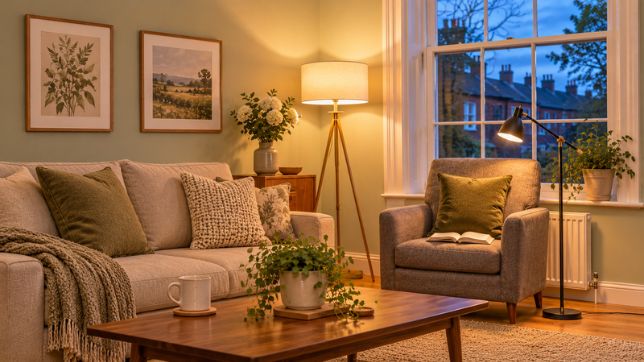
Most homes rely on one ceiling light per room, and that single fitting is often the reason a space feels flat after dark. It lights the floor more than the people in the room, leaves corners in shadow, and makes it hard to switch from busy evenings to quiet ones. A standing lamp is one of the simplest ways to fix that, because it adds light at a different height without any wiring work.
If you are starting from scratch, browsing a wide range of floor lamps can help you see how much the style, shade, and height vary from one design to the next. Some throw light up toward the ceiling, some point down onto a chair, and some do both. Knowing what each type does makes it much easier to choose the right one for each room.
Why a Standing Lamp Works So Well
A standing lamp sits between the ceiling light and the table lamp. That middle height matters. Light at eye level or just above it feels softer and more natural than light coming straight down from the ceiling.
A lamp on the floor also frees up surfaces. Side tables and shelves stay clear for books, plants, and drinks. In a small apartment, that can make the room feel less cluttered.
The Main Types of Standing Lamps
Before you buy, it helps to know what each design is good at. Most standing lamps fall into one of a few groups.
Uplighters
An uplighter points its light toward the ceiling. The ceiling then bounces that light back into the room, creating a soft, even glow. They suit rooms with pale ceilings and give gentle background light without glare.
Arc Lamps
An arc lamp has a long, curved arm that reaches over a sofa or dining table. The base sits to one side, so the light hangs above the seating without a ceiling fitting. Arc lamps need floor space and a heavy base, so they suit larger rooms better than tight corners.
Reading Lamps
A reading lamp has a shade or head that directs light downward onto a chair or desk. Many have an adjustable neck, so you can point the light exactly where you need it. These are useful beside armchairs, in bedrooms, and in home offices.
Multi-Head Lamps
Some lamps have two or three heads on one stem. Each head can point in a different direction, so one lamp can light the ceiling, a wall, and a reading spot at once. These are handy in rooms where you do several things in the evening.
Choosing the Right Lamp for Each Room
Living Room
The living room usually needs the most flexibility. Many people watch TV, read, chat, and work there on the same evening. A good plan is to combine a soft background light with one focused light near a favorite seat.
Place an uplighter or tripod lamp in a dark corner to fill the room gently. Then add a reading lamp beside the chair or end of the sofa where someone sits most often. This mix of light sources is the same approach many decorators use, and you can find more room-by-room ideas in these home upgrade tips.
Bedroom
Bedrooms need calm, low light in the evening. A bright overhead light just before sleep can feel harsh. A standing lamp with a fabric shade, placed in a corner or beside a reading chair, gives a softer option.
If you have a dressing area, light it from the side rather than from behind. Light from behind puts your face in shadow when you look in the mirror. This guide to dressing table ideas covers how to plan lighting and mirrors together.
Home Office
For a desk, choose a lamp with an adjustable head that you can angle across the work surface. Place it on the opposite side to your writing hand so your hand does not cast a shadow over the page. Keep the light pointed at the desk, not at your screen, to avoid glare.
Bulbs, Brightness, and Color
The lamp is only half the decision. The bulb inside it shapes how the light actually feels.
Check Lumens, Not Watts
Lumens tell you how bright a bulb is. Watts only tell you how much power it uses. According to the Energy Saving Trust, an LED bulb of around 800 lumens gives roughly the same brightness as an old 60 watt incandescent bulb. For a reading lamp, that is a sensible starting point. For a background uplighter, you may want more, since the light is spread across the ceiling.
Pick a Warm Color Temperature
Color temperature is measured in kelvin (K). Lower numbers look warmer and more yellow. Higher numbers look cooler and bluer. The Energy Saving Trust notes that very warm white bulbs at about 2700K suit living areas and bedrooms, while cool white bulbs at 4000K and above can feel harsh in most rooms of a home.
Consider Dimming
A dimmable bulb, paired with a lamp that has a dimmer switch, lets one lamp do several jobs. Bright for reading, low for watching a movie. Check that both the bulb and the lamp say they support dimming, as not every LED bulb does.
Placement Tips That Make a Difference
Where you put a lamp matters as much as which lamp you buy. Keep these points in mind:
- Put lamps in corners that feel dark or unused. Light there makes the whole room feel larger.
- Keep the bottom of the shade at or slightly above eye level when seated. This stops you from looking straight at the bulb.
- Avoid placing a lamp directly behind the TV, where it can cause glare on the screen.
- Leave enough space around arc lamp bases so nobody trips over them.
- Use two or three light sources in a room rather than one very bright lamp.
Safety Basics
Standing lamps are simple to use, but a few habits keep them safe. Run cables along the wall rather than across walkways, and avoid hiding them under rugs, where damage can go unnoticed. Electrical Safety First advises checking cables and plugs regularly for wear and not overloading extension leads or sockets. It also warns that flickering lights should not be ignored, as they can point to a fault that needs a registered electrician.
Choose a lamp with a stable, weighted base, especially if you have children or pets.
Frequently Asked Questions
1. How tall should a standing lamp be?
Most standing lamps are between about 150 cm and 180 cm tall. For a reading lamp, the bottom of the shade should sit roughly at shoulder height when you are seated.
2. Can a standing lamp replace a ceiling light?
In small rooms, two well-placed lamps can provide enough light for evenings. In larger rooms, they work best alongside the ceiling light rather than instead of it.
3. What bulb is best for a bedroom lamp?
A warm white LED bulb of around 2700K gives a soft, relaxing light that suits bedrooms.
Conclusion
A standing lamp is one of the easiest changes you can make to a room. It adds light at a more comfortable height, fills dark corners, and gives you more control over how a space feels in the evening. Choose the type based on how you use each room, pick a warm bulb with enough lumens, and place the lamp where it lights people and surfaces rather than the empty floor. With two or three light sources in each room, even a plain space can feel warm and welcoming after sunset.