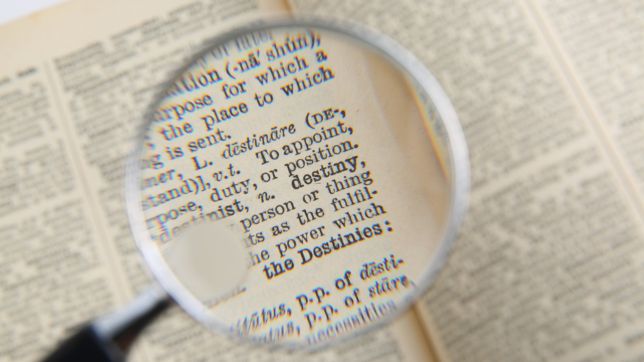
A magnifying glass is one of the simplest optical tools, yet it can make a remarkable difference when looking at small objects or tiny details. From reading fine print to examining coins, repairing electronics, studying plants, and completing delicate crafts, this small handheld device has remained useful for generations. But what is a magnifying glass used for, and why does it make objects appear larger?
At its most basic level, a magnifying glass uses a convex lens to bend light and create a larger virtual image of an object. The lens is thicker in the middle and thinner around the edges. When light passes through the curved glass, it is refracted, or bent, toward the centre. When your eyes receive these rays, your brain interprets them as coming from a larger, upright image.
Understanding what is a magnifying glass used for requires looking beyond its familiar appearance. Although many people associate magnifying glasses with reading small text, they have applications in hobbies, science, education, inspection, electronics, jewellery, crafts, and even outdoor activities.
This guide explains what is a magnifying glass used for, how it works, where it is commonly used, and why this simple optical instrument remains valuable today.
What Is a Magnifying Glass Used For?
So, what is a magnifying glass used for in everyday life? Its primary purpose is to make small objects, letters, patterns, and details easier to see. A magnifying glass does this by producing an enlarged image through a convex lens.
People commonly use magnifying glasses for:
- Reading small print
- Examining maps
- Inspecting coins and stamps
- Sewing and embroidery
- Model building
- Jewellery inspection
- Studying plants and insects
- Examining small mechanical parts
- Inspecting electronics
- Educational science activities
- Looking at artwork and fine details
- Identifying tiny markings and labels
The answer to what is a magnifying glass used for can therefore be quite broad. It is not limited to one particular profession or activity. Anyone who needs to examine something small can potentially benefit from magnification.
How Does a Magnifying Glass Work?
To understand what is a magnifying glass used for, it helps to understand the optical principle behind it.
A typical magnifying glass contains a convex lens. Unlike a flat piece of glass, a convex lens curves outward and is thicker at its centre. When light rays travel through the lens, the curved surface causes them to change direction.
This process is called refraction.
When an object is positioned within the focal length of a convex lens, the lens produces an enlarged, upright, virtual image. Your eyes receive the refracted rays, and your brain interprets them as if they originated from a larger object.
The result is the familiar magnified appearance that makes tiny writing and objects easier to inspect.
The Convex Shape
The first important part of a magnifying glass is its shape. The lens is:
- Thick in the middle
- Thin at the edges
- Curved on one or both sides
This shape allows the lens to converge incoming light rays.
Refraction
As light enters the glass, it changes direction because light travels at different speeds through air and glass. The curved shape of the lens causes the rays to bend toward one another.
Virtual Image
The rays reaching your eyes appear to come from a larger image behind the lens. This is called a virtual image because light rays do not actually meet at the apparent image location.
This explains what is a magnifying glass used for from an optical perspective: it changes how light from a small object reaches your eyes, allowing the object to appear larger.
What Is a Magnifying Glass Used For in Reading?
One of the most familiar answers to what is a magnifying glass used for is reading.
Small print can be difficult to examine, especially when letters are printed in a tiny font. A magnifying glass can enlarge those letters so that individual characters become easier to distinguish.
It can be useful for:
- Newspaper text
- Books with small fonts
- Product labels
- Medication labels
- Instructions
- Maps
- Menus
- Small handwritten notes
- Printed documents
A traditional handheld magnifier is often enough for occasional reading. Some people also use illuminated magnifiers, which combine a lens with an integrated light source.
The advantage of magnification is that it does not change the original text. Instead, it creates a larger optical image that makes the existing details easier to examine.
What Is a Magnifying Glass Used For in Crafts and Hobbies?
Another important answer to what is a magnifying glass used for is detailed craftwork.
Many hobbies involve objects or materials that contain tiny components. A magnifying glass can make these details easier to see.
Sewing
A magnifying glass can help when working with small stitches, needles, threads, and intricate patterns. A hands-free magnifier can be particularly useful because both hands remain available for the project.
Embroidery
Embroidery involves precise placement of thread. Magnification can make individual stitches and small patterns easier to inspect.
Model Building
Model builders often work with tiny parts, decals, lettering, and mechanical components. A magnifier can help identify small pieces and position them accurately.
Jewellery Making
Jewellery contains extremely small details. Magnification can help with inspecting stones, settings, clasps, chains, and decorative patterns.
For these reasons, what is a magnifying glass used for can include almost any hobby where precision and close visual inspection are important.
What Is a Magnifying Glass Used For in Science?
Science is another area where magnification is valuable.
Although a magnifying glass does not provide the extreme magnification of a laboratory microscope, it can provide a convenient first level of visual enlargement.
Students can use magnifying glasses to examine:
- Leaves
- Flowers
- Seeds
- Soil particles
- Insects
- Feathers
- Rocks
- Textures
- Small biological structures
A magnifying glass can also be useful in outdoor education. For example, students examining a leaf may notice veins, surface patterns, tiny hairs, or signs of insect activity that are difficult to see with the naked eye.
Thus, what is a magnifying glass used for in science? It is mainly used for basic visual inspection and observation.
What Is a Magnifying Glass Used For in Nature Study?
Nature enthusiasts frequently use magnifying glasses to investigate small details in the environment.
A person exploring a garden might use one to look closely at:
- Insect wings
- Flower petals
- Leaf structures
- Tree bark
- Seeds
- Moss
- Small stones
- Shells
Magnification encourages careful observation. Instead of simply seeing a leaf, for example, you can examine its surface and notice patterns that would otherwise remain difficult to distinguish.
For children, a magnifying glass can also turn an ordinary outdoor walk into an observation activity.
What Is a Magnifying Glass Used For in Coin Collecting?
Coin collecting is another classic example of what is a magnifying glass used for.
Coins contain small inscriptions, dates, mint marks, symbols, textures, and design details. Collectors often examine these features when identifying or studying coins.
A magnifying glass can help reveal:
- Small lettering
- Dates
- Mint marks
- Fine design elements
- Surface scratches
- Edge details
- Manufacturing characteristics
- Wear patterns
Collectors should remember that magnification makes imperfections easier to see but does not automatically determine a coin’s authenticity or monetary value. Professional evaluation may be necessary for valuable or disputed items.
What Is a Magnifying Glass Used For in Stamp Collecting?
Stamp collectors also use magnifying glasses to examine tiny details.
Stamps can contain fine printing, perforations, colour variations, watermarks, and other characteristics that may be difficult to see without magnification.
A magnifier can help collectors compare stamps and inspect their condition.
This is another reason what is a magnifying glass used for has such a wide answer. The tool is useful whenever small visual differences matter.
What Is a Magnifying Glass Used For in Electronics?
Electronics repair and inspection can involve extremely small components.
A magnifying glass can help technicians and hobbyists inspect:
- Circuit boards
- Solder joints
- Small connectors
- Component markings
- Wires
- Pins
- Surface damage
- Tiny cracks
A jeweller’s loupe or illuminated inspection magnifier may provide greater convenience for particularly small components.
For basic electronics work, the purpose is not necessarily to enlarge an entire device. Instead, the magnifier helps the user focus on a specific small area.
What Is a Magnifying Glass Used For in Jewellery Inspection?
Jewellery professionals and hobbyists often need to examine tiny features.
A magnifying lens can help reveal:
- Scratches
- Surface marks
- Settings
- Prongs
- Engravings
- Gemstone details
- Manufacturing imperfections
Higher magnification tools, such as jeweller’s loupes, are designed for more detailed inspection than a standard household magnifying glass.
Still, the underlying principle is similar: magnification creates a larger apparent image so small details can be examined.
What Is a Magnifying Glass Used For in Education?
A magnifying glass is also a useful educational tool.
Teachers can use magnifiers to demonstrate basic concepts involving light, lenses, observation, and image formation. Students can use them to inspect classroom objects or natural materials.
For example, a science lesson might ask students to compare a leaf with and without magnification. This simple exercise demonstrates how optical instruments can reveal details that are difficult to observe normally.
A magnifying glass can therefore support lessons about:
- Light
- Refraction
- Lenses
- Observation
- Image formation
- Scientific investigation
What Is a Magnifying Glass Used For When Inspecting Documents?
Small printed information can sometimes be found on documents, tickets, labels, packaging, or historical materials.
A magnifying glass can help users inspect tiny text and fine printing.
However, it is important to understand that magnification does not magically recover information that is absent or physically damaged. It simply makes existing visual details larger.
This distinction is important when asking what is a magnifying glass used for. It improves visual access to details; it does not create new information.
What Is a Magnifying Glass Used For in Repair Work?
Repairing small objects can require close visual inspection.
A magnifying glass may be helpful when examining:
- Watches
- Clocks
- Small mechanical parts
- Screws
- Connectors
- Miniature components
- Printed circuit boards
- Small tools
A hands-free magnifier can be particularly useful because repair work often requires both hands.
Some professional inspection systems combine magnification with lighting and adjustable stands for greater control.
What Is a Magnifying Glass Used For in Map Reading?
Maps sometimes contain very small text, symbols, roads, coordinates, and other information.
A magnifying glass can make these details easier to distinguish.
This can be particularly useful when working with:
- Historical maps
- Detailed topographic maps
- Old documents
- Small-scale maps
- Printed travel maps
- Geological maps
Although digital maps have reduced the everyday need for physical magnifiers, paper maps still have situations where magnification can be useful.
What Is a Magnifying Glass Used For in Art and Antiques?
Art collectors, conservators, students, and enthusiasts may use magnification to examine fine details.
A magnifying glass can reveal:
- Brushwork
- Fine lines
- Surface texture
- Small decorative details
- Cracks
- Printing patterns
- Material characteristics
However, a simple magnifying glass should not be considered a complete authentication tool. Determining the origin, age, or authenticity of valuable artwork generally requires specialist knowledge and additional methods.
What Is a Magnifying Glass Used For When Focusing Sunlight?
A convex lens can also concentrate sunlight.
When sunlight passes through a convex lens, the lens can bring the rays toward a focal region. This creates a concentrated area of light and heat.
Historically and experimentally, people have used this optical property for demonstrations involving heat and sunlight.
However, this application requires caution. Concentrated sunlight can become hot enough to damage materials or start fires. A magnifying glass should therefore never be used carelessly around dry grass, paper, flammable materials, or children.
The optical principle remains an interesting demonstration of how a lens can manipulate light.
Why Does a Magnifying Glass Make Things Look Bigger?
The answer is connected to the position of the object relative to the lens’s focal point.
When an object is placed within the focal length of a convex lens, the lens produces an upright, enlarged virtual image.
Your eyes do not see the object exactly as it exists in its original size. Instead, they receive light rays that have been redirected by the lens.
Your visual system interprets those rays as coming from a larger image.
This is why what is a magnifying glass used for is fundamentally an optical question. The device changes the path of light before it reaches your eyes.
What Is the Difference Between Magnification and Resolution?
An important concept when discussing what is a magnifying glass used for is the difference between magnification and resolution.
Magnification makes an image appear larger.
Resolution refers to the ability to distinguish two nearby details as separate features.
Increasing magnification does not automatically increase resolution. If a lens has poor optical quality, making the image larger may simply make a blurry image look larger.
Good magnifying glasses therefore depend on more than their stated magnification. Lens quality, optical design, lighting, and the user’s viewing distance can all affect the experience.
What Is a Magnifying Glass Used For Compared With a Microscope?
A magnifying glass and microscope both enlarge objects, but they serve different purposes.
A magnifying glass is:
- Simple
- Portable
- Easy to use
- Relatively inexpensive
- Suitable for quick inspection
A microscope is generally designed for much greater magnification and detailed examination of extremely small structures.
A magnifying glass is ideal when you need a quick visual aid rather than laboratory-level magnification.
Therefore, what is a magnifying glass used for is usually answered with everyday inspection and moderate magnification, while microscopes are used for much smaller structures and more detailed scientific work.
What Is a Magnifying Glass Used For at Home?
At home, a magnifying glass can be surprisingly versatile.
Common uses include:
- Reading small labels
- Examining small objects
- Looking at craft materials
- Inspecting jewellery
- Studying plants
- Examining coins
- Checking small printed instructions
- Looking at tiny household components
A handheld magnifier takes up very little space and can be stored in a drawer until needed.
Illuminated models can be particularly convenient because they provide both magnification and additional light.
Different Types of Magnifying Glasses
Not every magnifier is designed in exactly the same way.
Handheld Magnifying Glass
This is the traditional design. It usually consists of a circular lens attached to a handle.
It is portable and suitable for occasional reading or inspection.
Illuminated Magnifying Glass
This design combines a magnifying lens with LED or another light source.
Additional illumination can make small details easier to distinguish.
Stand Magnifier
A stand magnifier rests on a surface rather than being held continuously. It can be useful for crafts, reading, and detailed work.
Head-Mounted Magnifier
These magnifiers are worn like glasses or attached to a headband. They can leave both hands free.
Pocket Magnifier
Compact magnifiers are designed for portability and can be useful for collectors, travellers, and outdoor observers.
How to Use a Magnifying Glass Correctly
Knowing what is a magnifying glass used for is only part of the process. Proper positioning can make a significant difference.
Start by holding the lens between your eye and the object. Slowly adjust the distance between the lens and object until the image becomes clear.
If the image is blurry:
- Move the lens slightly closer or farther away.
- Adjust the object position.
- Improve the lighting.
- Keep the lens clean.
- Avoid viewing through a heavily scratched lens.
Different magnifying glasses have different focal lengths, so the ideal viewing distance varies.
Advantages of Using a Magnifying Glass
A magnifying glass offers several practical benefits.
Simplicity
It does not require batteries unless it includes built-in lighting.
Portability
Most models are small enough to carry easily.
Accessibility
It provides a straightforward way to enlarge visual information.
Versatility
It can be used for reading, hobbies, education, inspection, and observation.
Affordability
Basic magnifying glasses are generally inexpensive compared with sophisticated optical equipment.
These characteristics help explain why the answer to what is a magnifying glass used for extends across so many different activities.
Limitations of a Magnifying Glass
Despite its usefulness, a magnifying glass has limitations.
It cannot provide unlimited magnification. As magnification increases, the visible field generally becomes smaller and maintaining focus becomes more demanding.
Cheap lenses can also introduce distortions around the edges. Scratches, fingerprints, poor lighting, and incorrect positioning can reduce image quality.
For extremely small objects, a microscope or specialised optical instrument may be more appropriate.
Understanding these limitations helps users choose the right tool for the job.
Safety Considerations
Most everyday magnifying-glass use is harmless, but certain situations require care.
The most important safety concern involves sunlight. A convex lens can concentrate sunlight into a small area and create significant heat.
Never leave a magnifying glass in direct sunlight where it can focus light onto flammable objects.
A magnifying glass should also never be used to look directly at the Sun. Direct solar viewing can cause severe eye injury.
When children use magnifying glasses, adult supervision is appropriate, particularly during outdoor activities involving sunlight.
Why Magnifying Glasses Are Still Useful Today
Modern smartphones, tablets, cameras, and digital magnification tools have changed how people inspect small details. Even so, the traditional magnifying glass remains useful because it is immediate and simple.
There is no need to charge it, install software, open an application, or connect to a device.
Pick it up, position it correctly, and the object appears larger.
That simplicity is a major part of its continuing usefulness.
Frequently Asked Questions
What is a magnifying glass used for?
A magnifying glass is used to make small objects, letters, markings, and details appear larger and easier to examine. Common applications include reading, crafts, collecting, science, jewellery inspection, repair work, and nature observation.
What is a magnifying glass used for in everyday life?
In everyday life, it can be used for reading fine print, examining labels, looking at small objects, inspecting coins, completing crafts, and studying details that are difficult to see with the naked eye.
What is a magnifying glass used for in science?
In science education and basic observation, it can be used to examine plants, insects, rocks, soil, seeds, and other small specimens.
What is a magnifying glass used for in reading?
It enlarges small text, allowing letters and words to appear larger and potentially easier to distinguish.
What is a magnifying glass used for in crafts?
It can help with sewing, embroidery, model building, jewellery making, miniature work, and other activities requiring close visual attention.
What is a magnifying glass used for in coin collecting?
Collectors use it to inspect dates, lettering, mint marks, surface details, scratches, and other small characteristics on coins.
What is a magnifying glass used for in electronics?
It can help users inspect circuit boards, solder joints, connectors, component markings, and other small electronic features.
What is a magnifying glass used for in nature?
It can enlarge details on leaves, flowers, insects, rocks, bark, moss, and other natural objects.
What is a magnifying glass used for besides making things look bigger?
Its convex lens can also manipulate light, including concentrating incoming sunlight into a small area. This optical property can be demonstrated experimentally, although sunlight-focused applications require appropriate safety precautions.
What is a magnifying glass used for in education?
It can help students explore basic concepts of light, refraction, lenses, image formation, and scientific observation.
Conclusion
So, what is a magnifying glass used for? The simplest answer is that it is used to make small objects and details appear larger and easier to examine. But its practical applications extend much further.
A magnifying glass uses a convex lens to bend light and produce an enlarged virtual image. This basic optical principle allows people to read fine print, inspect coins and stamps, study plants and insects, complete detailed crafts, examine jewellery, inspect electronics, and explore scientific specimens.
The usefulness of a magnifying glass comes from its combination of simplicity, portability, affordability, and versatility. It does not require complicated equipment to reveal details that the unaided eye may struggle to see.
Whether it is sitting beside a sewing project, being carried by a coin collector, used during a science lesson, or helping someone read tiny printed information, the magnifying glass demonstrates how a simple optical device can make the small world easier to observe.
Ultimately, what is a magnifying glass used for depends on what you need to see. Whenever small details matter, this classic optical tool can provide a practical way to bring those details into clearer view.