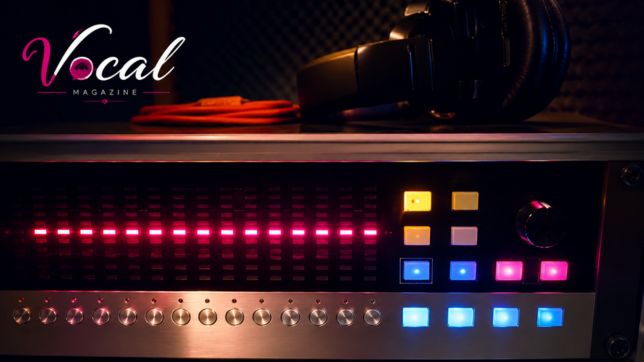
A quad equalizer is a versatile tool designed to shape, control, and improve audio or electronic signals across multiple channels. While the term may sound highly specialized, its basic idea is straightforward: a quad equalizer provides four independent signal-processing paths that allow users to adjust frequencies, remove unwanted sounds, enhance important details, and create a more balanced output.
The meaning of quad equalizer can change depending on the field in which it is used. In professional audio, it can describe a four-channel graphic equalizer used for studio mixing or live sound reinforcement. In modular synthesis, it can refer to a four-band resonant filtering system with voltage-controlled parameters. In electronics and computing, the term may describe integrated circuits designed to equalize high-speed serial signals.
Understanding these different applications reveals why equalization remains such an important part of modern sound and signal engineering.
What Is a Quad Equalizer?
At its simplest, a quad equalizer is an equalization device featuring four channels or four interconnected processing sections. Equalization, commonly shortened to EQ, changes the relative level of different frequencies within a signal.
For example, low frequencies are associated with bass, while midrange frequencies often define vocals, guitars, keyboards, and many other instruments. High frequencies contribute brightness, detail, and clarity. By adjusting these areas, an equalizer can make audio sound warmer, clearer, sharper, softer, or more controlled.
The four-channel design of a quad equalizer becomes particularly useful when several signals need to be processed independently. Instead of using separate equalizers for every signal path, one multi-channel unit can provide a centralized solution.
This is valuable in professional studios, concert venues, theaters, broadcasting environments, and other applications where efficient signal management is important.
Mackie Quad EQ and Professional Audio
One notable example associated with the term is the Mackie Quad EQ, a professional equalization system designed around four independent channels. It combines graphic equalization with digital control features, giving sound engineers detailed control over frequency shaping.
A major feature of a system like this is its use of 30-band graphic equalization. A 30-band equalizer divides the audible spectrum into numerous frequency sections, allowing engineers to make precise adjustments rather than relying only on broad bass, mid, and treble controls.
This level of control is especially useful when tuning a room or correcting problems in a sound system. For instance, a particular venue may produce excessive low-frequency resonance. An engineer can identify the problematic frequency and reduce it without dramatically changing the entire character of the audio.
Real-Time Analysis and Pink Noise
Another important function associated with advanced equalization systems is Real-Time Analysis, commonly known as RTA. An RTA displays information about frequency energy, helping an engineer see how a sound system is behaving.
Visual analysis can complement careful listening. Instead of guessing why a room sounds unusually boomy or harsh, an engineer can examine the frequency response and identify areas that deserve attention.
A pink noise generator can also be useful during system setup. Pink noise contains energy distributed across the frequency spectrum in a way that is useful for audio testing and room measurement. When combined with a measurement microphone, such tools can help engineers evaluate a venue and make more informed EQ adjustments.
This makes a quad equalizer more than a simple sound-control device. It can become part of a complete system-tuning workflow.
Snapshots and Easy Recall
Modern digital-controlled audio equipment often includes memory functions that allow users to store settings. The Mackie Quad EQ, for example, is associated with snapshot storage, making it possible to save customized configurations and recall them later.
This feature can be extremely practical in professional environments. A concert venue may host different performers, while a theater may have different productions with unique sound requirements. Instead of rebuilding every EQ setting manually, engineers can retrieve an earlier configuration and make small adjustments.
The result is greater consistency and efficiency, especially when equipment is used repeatedly in changing environments.
Quad Equalizer in Modular Synthesizers
The concept becomes quite different in the world of modular synthesis. A quad resonant equalizer is not simply a traditional four-channel graphic EQ. Instead, it can consist of four connected filter or equalization bands designed for creative sound shaping.
Modules such as the Cwejman RES-4 or similar quad resonant equalizer designs can give users independent control over frequency, bandwidth, and resonance. In many systems, these parameters can also be influenced through control voltage, commonly referred to as CV.
Voltage control is one of the defining features of modular synthesis. Rather than turning a control manually and leaving it fixed, a synthesizer module can receive changing electrical control signals. This means the EQ or filter response can evolve over time.
Such flexibility makes quad resonant equalizers attractive for experimental sound design.
Resonance and Musical Sound Design
Resonance is particularly important in modular filtering. When resonance is increased around a selected frequency, that frequency can become more pronounced, producing a sharper and sometimes more dramatic character.
With multiple resonant bands, a synthesist can create complex peaks and sculpt the frequency spectrum in unusual ways. The effect may be subtle, adding presence and movement, or highly pronounced, producing tones that sound almost like separate resonating instruments.
Some resonant filter designs can even approach or enter self-oscillation under certain settings. This extends their role beyond conventional equalization. They can become active sound-generation elements rather than merely corrective processors.
That distinction highlights an important principle: equalization is not always about fixing problems. It can also be an instrument for creating entirely new sonic textures.
Quad Equalizers in High-Speed Electronics
The term quad equalizer also appears outside traditional audio. In electronics and computing, it can describe a multi-channel integrated circuit designed to compensate for signal degradation in high-speed communication systems.
As digital signals travel through cables, circuit traces, connectors, and other transmission paths, their quality can deteriorate. High-frequency components may experience attenuation, distortion, or other forms of loss. Equalization circuits help compensate for these effects so that the receiving system can interpret the signal more reliably.
Devices such as DisplayPort or high-speed serial equalizers can therefore perform a function that is conceptually similar to audio EQ, even though the signals and engineering requirements are very different.
Instead of making music sound better, these circuits are helping electronic data survive a challenging transmission environment.
DisplayPort and Serial Signal Applications
High-speed video and data standards require careful signal integrity management. When digital information moves rapidly through a physical connection, the signal received at the other end may not look exactly like the original transmission.
A quad equalizer integrated circuit can process multiple channels simultaneously, making it useful in systems where several high-speed lanes must be conditioned.
This type of equalization is common in modern electronics because higher data rates create increasingly demanding signal-integrity challenges. Engineers must consider factors such as transmission distance, frequency loss, interference, and channel quality.
Although the application is very different from studio audio, the fundamental idea remains similar: equalization compensates for undesirable changes in a signal.
Why Quad Equalizers Matter
The strength of a quad equalizer lies in its ability to provide structured control over multiple signals or frequency regions. In professional audio, four independent channels can simplify system design and provide detailed control for complex setups.
In modular synthesis, four resonant sections can become powerful creative tools capable of transforming a simple sound into something dynamic and expressive.
In digital electronics, four-channel equalization can improve the reliability of high-speed data transmission.
These uses demonstrate how a single engineering concept can appear in very different forms.
Choosing the Right Quad Equalizer
Choosing a quad equalizer depends primarily on the intended application. Someone working in live sound may prioritize precise graphic EQ, RTA functions, measurement support, memory storage, and reliable channel management.
A modular synthesizer user may care more about resonance, voltage control, filter architecture, frequency range, and musical response.
An electronics engineer, meanwhile, is likely to focus on signal rate, channel count, interface compatibility, equalization performance, power requirements, and signal integrity.
For that reason, the phrase quad equalizer should never be interpreted as describing one universal piece of equipment. It is better understood as a category of four-channel equalization technology whose design changes according to the signals it is intended to process.
Conclusion
A quad equalizer demonstrates how frequency and signal control can serve many different purposes. In professional audio, a four-channel equalizer can provide detailed control over sound systems, assist with room tuning, and help engineers maintain consistent results. Systems such as the Mackie Quad EQ illustrate how graphic equalization, real-time analysis, pink noise, and stored settings can work together in a professional environment.
In modular synthesis, quad resonant equalizers offer a more creative approach, combining filtering, resonance, and voltage control to create evolving and sometimes experimental sounds.
Meanwhile, in electronics, quad equalizer integrated circuits help maintain signal quality in high-speed communication and display systems.
Despite these differences, the underlying purpose remains remarkably consistent: control a signal so that it performs better, behaves more predictably, or becomes more expressive. Whether the signal is a vocal recording, a synthesizer patch, or a high-speed digital data stream, equalization remains one of the most powerful tools available for shaping and improving it.
FAQs
What is a quad equalizer?
A quad equalizer is a four-channel or four-section equalization system used to shape audio frequencies or condition electronic signals. Its exact design depends on the application.
What is a quad equalizer used for?
A quad equalizer can be used for live sound reinforcement, studio mixing, room tuning, modular synthesis, and high-speed electronic signal conditioning.
What is the Mackie Quad EQ?
The Mackie Quad EQ is a professional four-channel equalization system associated with 30-band graphic EQ, real-time analysis, pink noise generation, measurement support, and stored snapshots.
How does a 30-band equalizer work?
A 30-band equalizer divides the frequency spectrum into multiple adjustable bands. Users can raise or lower individual frequency ranges to improve balance, reduce unwanted sounds, or shape the overall tone.
What is a quad resonant equalizer in modular synthesis?
A quad resonant equalizer is a modular synthesizer module featuring multiple filter or EQ sections. Depending on the design, parameters such as frequency, bandwidth, and resonance can be controlled manually or through control voltage.
Can a quad equalizer create new sounds?
Yes. In modular synthesis, resonant equalizers can be used creatively to emphasize frequencies, add movement, produce resonant tones, and potentially contribute to self-oscillating sounds.
Are quad equalizers used in electronics?
Yes. In electronics, quad equalizer integrated circuits can compensate for signal loss and distortion in high-speed serial or display connections, helping maintain signal integrity.
What is the difference between an audio EQ and an electronic signal equalizer?
An audio EQ changes the frequency balance of audible sound. An electronic signal equalizer compensates for transmission losses and other signal impairments in high-speed digital systems. Although their purposes differ, both manipulate signal characteristics to improve performance.
Secondary Keywords
- four-channel equalizer
- 4 channel EQ
- 30-band graphic equalizer
- audio equalizer
- professional audio EQ
- quad resonant equalizer
- modular synthesizer EQ
- real-time analyzer EQ
- pink noise generator
- signal equalizer
- high-speed signal equalizer
- DisplayPort equalizer
- audio frequency shaping
- sound system tuning