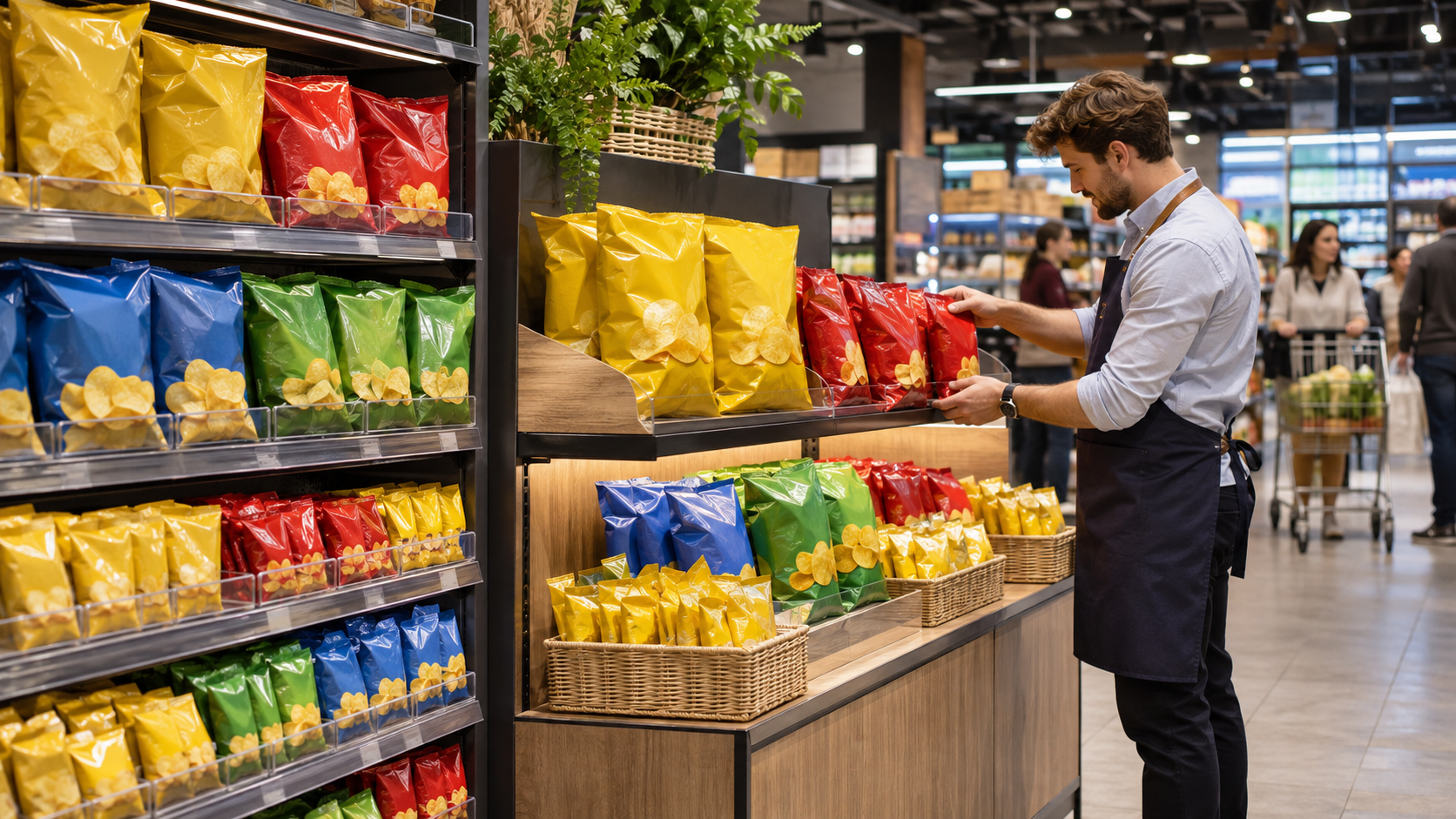
Walk into any supermarket or convenience store, and you will notice snacks displayed in different shapes, flavors, and package sizes. Some bags are designed for a quick bite, while others are large enough for families or groups of friends. These differences may seem simple, but they play an important role in how snack products are marketed, displayed, and purchased.
For food manufacturers and retailers, understanding chip bag sizes can help improve product planning and customer convenience. A suitable package can make a snack more attractive to its intended audience while supporting practical pricing and distribution decisions. Businesses that understand why customers prefer certain package formats can create a product range that fits different shopping habits and occasions.
What Packaging Size Tells Customers
Customers often form an opinion about a snack before reading its ingredients or nutritional information. The size of the package can immediately suggest how the product is intended to be used.
A small bag generally communicates convenience. It may appeal to someone looking for a quick snack during a busy day. A larger package often suggests sharing, household use, or a more economical option for frequent consumption.
These impressions influence purchasing decisions, particularly when customers are comparing similar products.
Packaging size can also help brands communicate their product positioning. A compact, carefully designed package may suit a premium snack, while larger formats can appeal to families looking for practical value.
Why Small Snack Bags Work Well in Convenience Stores
Convenience stores attract customers who frequently want something quick and easy to purchase. They may be stopping for fuel, buying a drink, or picking up a snack during their journey.
Smaller packages work particularly well in these situations because they are easy to carry and usually require little consideration before purchase.
Retailers often place individual snack bags near checkout counters or alongside beverages to encourage convenient purchases.
Several advantages make smaller packages useful in these environments:
- Easy handling: Customers can carry the snack without needing additional storage space.
- Convenient portions: Individual packages are suitable for eating during short breaks.
- Flexible displays: Compact bags can fit into smaller retail areas.
- Product variety: Stores can offer multiple flavors without allocating large amounts of shelf space.
For snack brands, supplying suitable package formats to convenience stores can help make their products more accessible to customers looking for quick purchases.
How Family Packs Support Supermarket Shopping
Supermarkets serve customers with different shopping goals. Some purchase groceries for the week, while others shop for specific meals, gatherings, or household supplies.
Larger snack packages can be attractive to customers planning ahead.
Families may prefer buying one larger bag instead of several smaller ones, particularly when the snack will be shared at home. Larger formats may also offer a lower price per unit of weight, although this depends on the brand and retailer.
However, offering only large packages would not meet every customer’s needs.
Supermarkets benefit from providing a balanced selection of individual, regular, and sharing formats. This variety allows shoppers to select products based on their budgets, household size, and intended use.
For manufacturers, understanding these purchasing patterns can help determine which packaging formats deserve priority.
Multipacks Offer Another Way to Reach Customers
Multipacks provide an alternative to traditional family-size bags. Instead of placing all the chips inside one large package, manufacturers combine several individually sealed portions into a single outer pack.
This format can be useful for households where different family members want snacks at different times.
Parents may purchase multipacks for packed lunches, while office workers may appreciate having individually portioned snacks available throughout the week.
Multipacks can also help brands introduce flavor variety. A single package may contain several flavors, allowing customers to try different products without purchasing multiple large bags.
However, manufacturers must consider the additional packaging materials and handling requirements involved.
The format should provide meaningful convenience rather than simply increasing packaging complexity.
How Bag Dimensions Affect Shelf Organization
Retail presentation is another reason packaging dimensions matter. Stores need products that fit neatly on shelves, remain visible, and are easy for customers to reach.
When manufacturers compare chip bag sizes, they should consider how the packages will appear in actual retail displays.
A tall package may provide more space for branding, while a wider package may require additional shelf space. Smaller bags are often suitable for hanging displays or compact racks.
Store managers must also think about how many units can fit in a particular display area.
If packages are unnecessarily bulky, fewer products may fit on the shelf. On the other hand, packaging that is too compact may provide insufficient protection for delicate chips.
Successful shelf planning requires a balance between product visibility, practical dimensions, and customer accessibility.
The Relationship Between Package Size and Pricing
Price is an important factor in snack purchasing decisions, but customers do not always choose the cheapest package.
Some shoppers prefer affordable individual servings because they only need a small quantity. Others may choose larger bags because they offer better value for regular household consumption.
Retailers and manufacturers can use different package sizes to serve these purchasing preferences.
For example, a small bag may have a lower total selling price but a higher cost per ounce. A larger bag may cost more overall while offering a lower price per ounce.
Clear pricing information helps customers understand these differences.
Manufacturers should also consider how packaging expenses influence the final product price. Material usage, filling operations, and transportation requirements can vary between different formats.
A thoughtful pricing strategy considers both production costs and the value customers expect.
Different Sales Locations Need Different Packaging
A snack package that performs well in a supermarket may not be equally suitable for every sales environment.
Businesses should consider where their products are most likely to be purchased and consumed.
For example:
- Vending machines: Compact packages that fit the machine’s dispensing system.
- Cafeterias: Individual servings that are easy to distribute with meals.
- Entertainment venues: Packages suitable for eating during movies or events.
- Wholesale businesses: Larger formats intended for higher-volume purchases.
- Travel locations: Portable snacks that customers can carry conveniently.
These environments have different space limitations, customer expectations, and purchasing patterns.
Manufacturers that evaluate their distribution channels carefully can select packaging formats that work more effectively in each location.
Why Inventory Planning Matters for Snack Retailers
Offering several package sizes gives customers more choices, but it also creates inventory management responsibilities.
Retailers must decide how much stock to keep for each format. If smaller bags sell quickly, stores may need to restock them frequently. Larger packages might sell more consistently during weekends, holidays, or promotional events.
Sales patterns can vary depending on location, season, and customer demographics.
Tracking these patterns helps retailers avoid ordering excessive quantities of products that sell slowly.
Snack manufacturers also benefit from understanding demand because it can help them plan production schedules and packaging material purchases.
Better inventory planning can reduce unnecessary storage costs while improving product availability.
How Packaging Choices Affect Online Snack Sales
Online shopping has created additional opportunities for snack brands, but selling delicate food products through delivery services introduces practical challenges.
Packages must withstand handling during order preparation, transportation, and final delivery.
For online snack orders, the dimensions of individual bags influence how products fit inside shipping cartons.
Large, loosely arranged packages may take up unnecessary space, while tightly packed products can experience pressure during transportation.
Businesses should evaluate the relationship between the snack package and its outer shipping carton.
Product bundles can also be useful for online sales. Instead of shipping a single small bag, retailers may offer mixed-flavor boxes or collections of individually packaged snacks.
These arrangements can provide customers with convenient purchasing options while helping businesses organize deliveries more efficiently.
Testing Package Sizes Before Expanding a Product Range
Introducing a new package size may seem straightforward, but successful product development requires more than changing the dimensions of a bag.
Manufacturers need to determine whether customers actually want the proposed format.
Small-scale testing can provide useful information before a wider launch.
For example, a snack company could introduce a new package size in selected stores and compare its performance against existing products.
Important questions include whether customers understand the quantity offered, whether the price feels reasonable, and whether the package fits the intended selling environment.
Customer feedback can also reveal practical concerns, such as bags that are difficult to open or packages that take up too much storage space.
Testing helps companies make informed decisions instead of relying entirely on assumptions.
Preparing Snack Products for Seasonal Demand
Snack purchasing habits can change during holidays, celebrations, sporting events, and other seasonal occasions.
During gatherings, customers may prefer larger packages because snacks are often shared among several people.
At other times, smaller formats may be more suitable for school lunches, workplace breaks, and everyday convenience.
Retailers can respond to these differences by adjusting product displays and inventory levels.
Manufacturers may also introduce limited promotional bundles or special packaging formats for particular occasions.
However, seasonal planning should be based on realistic demand expectations.
Producing excessive quantities of specialized packaging can increase storage requirements and create unsold inventory.
Careful forecasting helps businesses prepare for changing customer preferences without making unnecessary production commitments.
Packaging Flexibility Supports Long-Term Growth
As snack brands grow, their packaging requirements often become more varied. A business that starts with one product size may eventually introduce individual servings, multipacks, or larger sharing formats.
This expansion can require adjustments to packaging materials, production equipment, and operational processes.
Manufacturers should therefore consider future flexibility when planning their packaging systems.
Equipment compatibility, filling accuracy, sealing requirements, and available production capacity all influence how easily a business can introduce additional formats.
Selecting suitable machinery and testing new package dimensions can help manufacturers manage product expansion more efficiently.
Businesses that plan their packaging requirements carefully are better prepared to respond to changing customer demand.
Conclusion
Packaging size is an important part of retail strategy because it influences how snacks are purchased, displayed, priced, and distributed. Businesses that understand these connections can develop product ranges that better serve convenience stores, supermarkets, online shoppers, and other customer groups.
For snack manufacturers exploring different packaging requirements, pallasmt.com offers packaging machinery and solutions designed for various production applications. Considering equipment capabilities alongside customer demand and packaging dimensions can help businesses make practical decisions when developing new snack formats.
Ultimately, successful snack packaging is about matching the product with the customer’s needs. Whether someone wants a quick individual snack or a larger package for sharing, offering suitable options improves convenience and creates a more satisfying shopping experience. By combining thoughtful packaging choices with effective retail planning, snack brands can build stronger relationships with their customers and support long-term business development.