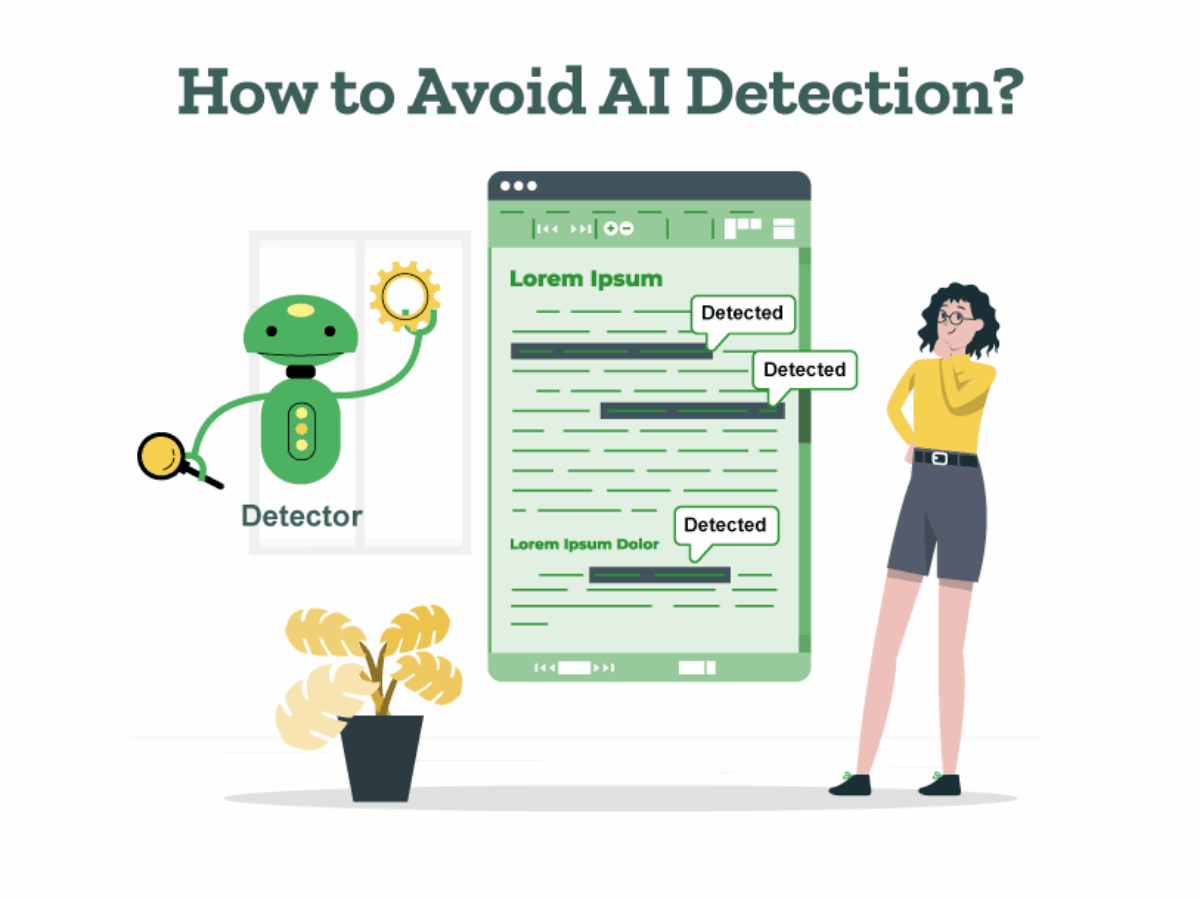
A friend of mine finished her dissertation draft at 2 am, ran it through a detector out of curiosity, and got 68 percent AI. She had typed every word herself. She spent the next day in tears, and honestly, I get it. These tools are strange. They don’t know what you wrote or why. They just score how predictable the text feels.
While it is a disappointing feeling and it’s almost frustrating to be judged on your writing through these tools, the fix is usually simpler than you’d expect. In this blog, learn how you can fix AI detection in your thesis with safe and easy ways.
What the Detector Actually Sees
Patterns. Sentences of similar length. Safe, general claims. Paragraphs that open with “Moreover” and close with a neat summary line. Sadly, that’s also how many of us were taught to write a thesis: sound formal, stay careful, never say anything too bold. So a nervous writer often scores worse than a relaxed one.
The goal isn’t beating software. It’s sounding like a person who did the work. Those two things overlap more than you’d think.
Check the Rules Before Anything Else
Read your university’s AI policy first. Yes, really. Some places allow grammar help. Some want a short declaration. Some ban it outright. If you used a tool anywhere in the process, let your supervisors know. That protects you more than any rewrite will.
Talk It Out, Then Type It
Take one flagged paragraph and close the file. Now explain the point out loud, like you’re telling a classmate over coffee. Type what you said, even if it’s clumsy. Then fix only what’s truly confusing. Leave the odd phrase you always use. Leave a sentence that runs a bit long. Small habits like that make writing sound like yours.
Use Details Nobody Else Has
Generic text gets flagged because anyone could have written it. Your project isn’t generic. You know why you picked interviews over a survey. You remember the pilot that fell apart in week three. You know your sample was 42 people, not 400. Put that in. Mention what your supervisor pushed back on and how you changed course. A paragraph full of real choices reads as human because a human made them.
Change the Rhythm
Count the words in each sentence of a flagged paragraph. If most land near twenty, there’s your problem. Write a short one. Then a long one that wanders a bit before it lands. Cut openers like “Furthermore” and “It is important to note that”. Replace vague lines with specific ones. “Results were affected” says nothing. “Our response rate dropped to 40 percent in round two” says something.
Skip the Paraphrasing Tools
Tempting, I know. Paste, click, done. But those tools produce the same smooth, swapped-synonym text that detectors love, and they often twist your meaning. “The sample demonstrated bias” can turn into “the specimen showed prejudice”. Your examiner will notice that long before any software does. Edit by hand. It takes longer, but every sentence still says what you mean.
Get Another Person to Read It
You’ve stared at your draft too long to see it clearly. Your university’s writing group can look at it, usually for free. Your supervisor can tell you where the argument feels thin. Paid thesis editing services can help too, as long as the editor improves your writing instead of replacing it. Ask how they treat AI tools, and avoid anyone who guarantees a detector score. Nobody can honestly promise that.
Keep Your Drafts
Turn on version history in Google Docs or Word today. Save your outlines, reading notes, and early drafts. If a flag ever turns into a meeting with your department, a timeline of your work is the best evidence you can bring. It costs nothing and could save you weeks of stress.
About Outside Writing Help
Some students look at a thesis writing service in UK to see how a strong chapter is built. That’s fine as a learning tool, or to know the online help is genuine. Handing in work someone else wrote is risky. If the work was plagiarized or AI-generated, the detector is the smallest part of that problem. Learn the structure, then write your own version.
Conclusion
My friend rewrote three paragraphs using these steps. She added her interview details, broke up the rhythm, and kept her drafts. Her score dropped, and more importantly, her supervisor had no doubts about the work. Your own voice reflecting through your work is what saves you from detection. Make it clearly yours and the rest tends to follow.