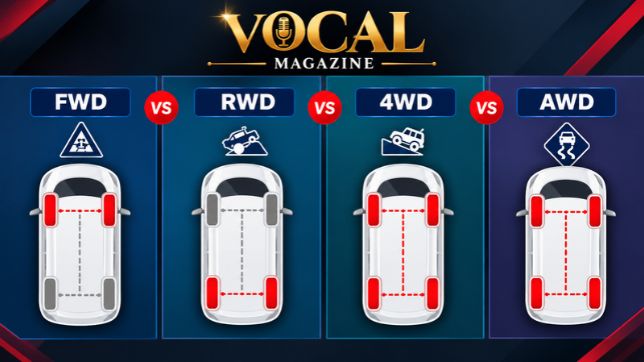
Choosing the right vehicle involves more than comparing its price, appearance, or engine power. The drivetrain also affects how a car handles different road conditions, uses fuel, and performs during everyday driving. Understanding FWD vs AWD can help you make a smarter decision when buying your next vehicle.
Front-wheel drive (FWD) sends engine power to the front wheels, while all-wheel drive (AWD) can distribute power to all four wheels when needed. Both systems have advantages, but the best option depends on your driving habits, local weather, budget, and road conditions. This guide explains their differences to help you choose confidently.
What Is Front-Wheel Drive (FWD)?
Front-wheel drive is a drivetrain system that sends engine power to the front wheels. In many FWD vehicles, the engine and transmission are positioned together near the front of the car.
Advantages of FWD
One major advantage of front-wheel drive is its practical design. Because it generally requires fewer drivetrain components than AWD, it can be lighter and less mechanically complex.
Other benefits include:
- Better fuel efficiency: FWD vehicles often use less fuel than comparable AWD models because they typically have less drivetrain weight and mechanical complexity.
- Lower ownership costs: Fewer drivetrain components can mean less maintenance and fewer potential repair expenses.
- Good everyday traction: The engine’s weight rests over the driven front wheels, helping maintain grip in many ordinary driving situations.
- Practical interior space: The drivetrain layout can allow manufacturers to use cabin space efficiently.
Disadvantages of FWD
FWD also has limitations. During hard acceleration, the front tires must manage both steering and driving forces, which can reduce available grip. On steep, slippery roads, the front wheels may struggle to maintain traction.
For drivers who regularly encounter deep snow, muddy tracks, or difficult terrain, FWD may not provide the traction they need.
What Is All-Wheel Drive (AWD)?
All-wheel drive is a system that can deliver engine power to all four wheels. Depending on the vehicle, AWD may operate continuously or engage additional wheels automatically when extra traction is needed.
Different manufacturers use different AWD designs, so performance varies between models.
Advantages of AWD
The main benefit of AWD is improved acceleration traction when road surfaces are slippery or uneven.
Its advantages include:
- Improved traction: Distributing power across four wheels can help a vehicle move forward on wet, snowy, or loose surfaces.
- Greater confidence in poor conditions: AWD can help drivers navigate changing road conditions when used appropriately.
- Better power delivery: Some performance vehicles use AWD to put engine power onto the road more effectively.
- Versatility: AWD can be useful for drivers who regularly travel on gravel roads, steep driveways, or slippery rural routes.
Disadvantages of AWD
AWD systems generally add weight and mechanical complexity. These factors can increase fuel consumption and potentially raise maintenance or repair costs compared with an otherwise similar FWD vehicle.
AWD also has an important limitation: it does not automatically improve braking. Tires and braking systems remain critical, and AWD cannot eliminate the risk of skidding or losing control.
FWD vs AWD: Key Differences Explained
Understanding the practical differences between these systems is essential when comparing vehicles.
Traction and Handling
In a basic FWD vs AWD comparison, AWD generally offers an advantage when accelerating on slippery surfaces because power can reach all four wheels. FWD works well on dry pavement and many ordinary roads.
Handling depends on more than the drivetrain. Vehicle weight distribution, suspension design, tires, and electronic stability systems also influence how a car responds when turning or changing direction.
Fuel Efficiency
FWD vehicles often provide better fuel efficiency than comparable AWD models. AWD systems can add weight and mechanical resistance, although the actual difference depends on vehicle design, engine choice, and driving conditions.
If you drive long distances daily, comparing official fuel-consumption figures for specific models can help you estimate ongoing costs.
Maintenance and Ownership Costs
FWD vehicles are often less expensive to maintain because their drivetrain systems are generally simpler. AWD vehicles may have additional components, such as a transfer mechanism or additional differentials, that require servicing or could need repairs.
However, maintenance costs vary by model. Always check the manufacturer’s service schedule and compare ownership costs before making a purchase.
Performance and Everyday Driving
FWD suits everyday commuting, shopping trips, and highway travel. It provides predictable performance for many drivers without requiring the additional hardware of AWD.
AWD can be valuable for drivers who need extra acceleration traction in challenging conditions. However, it is not a substitute for careful driving, appropriate tires, or adequate ground clearance.
How Do FWD and AWD Perform in Different Weather?
Weather and road surfaces can significantly affect vehicle traction.
Rain: Both systems can perform well on wet roads with suitable tires. AWD may help during acceleration, but it does not prevent hydroplaning or guarantee shorter stopping distances.
Snow and ice: AWD can make it easier to accelerate through snow, especially when the road is slippery. However, winter tires are essential in severe winter conditions because all four wheels still depend on tire grip for braking and steering.
Dry roads: FWD is generally sufficient for normal driving. AWD may benefit high-powered vehicles or drivers who prioritize additional traction, but many commuters will not need it.
Gravel, mud, and rough roads: AWD can help maintain forward movement on loose surfaces. Nevertheless, ground clearance, tire selection, and the vehicle’s specific drivetrain design determine how capable it is.
Which Drivetrain Should You Choose?
Your driving environment should guide your decision.
Choose FWD If You:
- Mostly drive around cities and suburban areas.
- Want to prioritize fuel efficiency and affordability.
- Travel mainly on paved roads and highways.
- Prefer a simpler drivetrain with potentially lower maintenance costs.
Choose AWD If You:
- Frequently drive on snowy or slippery roads.
- Regularly travel on gravel, muddy tracks, or steep routes.
- Need additional traction when accelerating in challenging conditions.
- Own a vehicle whose performance or intended use benefits from AWD.
Before buying, compare similar models rather than assuming every AWD vehicle is more capable than every FWD vehicle. Tires, vehicle design, and safety features can make a substantial difference.
Conclusion: Making the Right Choice FWD vs AWD
The best decision in the FWD vs AWD debate depends on your priorities. FWD is a practical option for everyday commuting, fuel efficiency, and potentially lower ownership costs. AWD offers additional traction when accelerating on slippery surfaces and can be useful for challenging road conditions.
For most drivers who travel primarily on paved roads, FWD may provide everything they need. If you regularly face snow, mud, steep routes, or other slippery conditions, AWD may be worth the additional cost.
Ultimately, compare vehicle specifications, expected fuel consumption, maintenance requirements, and tire options before deciding. Choosing the right drivetrain for your lifestyle will help you enjoy a safer, more comfortable, and more economical driving experience.
Frequently Asked Questions (FAQs) FWD vs AWD
What is the main difference between FWD and AWD?
FWD sends engine power to the front wheels, while AWD can distribute power to all four wheels to improve traction in challenging driving conditions.
Is FWD better than AWD for everyday driving?
FWD is a practical choice for everyday driving because it often offers better fuel efficiency, lower ownership costs, and reliable performance on paved roads.
Is AWD better in snow and rain?
AWD can improve acceleration traction on wet or snowy roads. However, it does not automatically improve braking or prevent skidding. Suitable tires and careful driving remain essential.
Which is more fuel-efficient, FWD or AWD?
FWD vehicles are generally more fuel-efficient than comparable AWD models because they often weigh less and have simpler drivetrain systems. Actual fuel consumption depends on the vehicle and driving conditions.
Is AWD more expensive to maintain than FWD?
AWD can cost more to maintain because it has additional drivetrain components. However, actual maintenance and repair costs vary by vehicle model.
Does AWD help a car stop faster?
No. AWD primarily helps distribute power for acceleration. Braking performance depends on the tires, brakes, road conditions, and vehicle systems.
Which drivetrain is better for highway driving?
FWD is usually sufficient for normal highway commuting. AWD can be beneficial when highways frequently experience snow, ice, or other slippery conditions.
Should I buy an FWD or AWD vehicle?
Choose FWD if you prioritize affordability, fuel efficiency, and everyday commuting. Consider AWD if you regularly drive on slippery roads, gravel, or challenging terrain.
FWD vs AWD FWD vs AWD FWD vs AWD FWD vs AWD FWD vs AWD FWD vs AWD FWD vs AWD FWD vs AWD FWD vs AWD