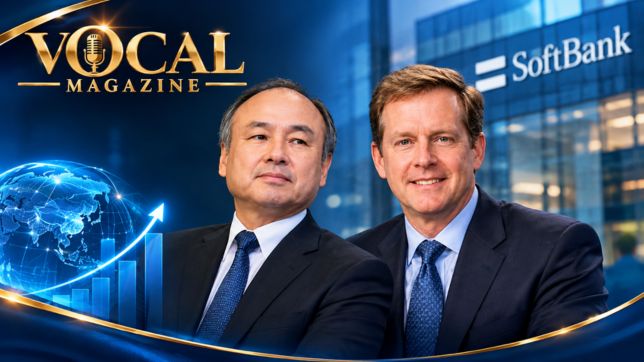
The modern business world is shaped by leaders who understand how to turn opportunities into long-term growth. Some focus on emerging technologies and ambitious investments, while others concentrate on industrial development, engineering, and operational excellence. Masayoshi Son and Greg Hayes represent these two distinct approaches to corporate leadership. Although both have held influential positions in major global companies, their professional journeys reflect different industries, investment philosophies, and ideas about business success.
Masayoshi Son is widely known for founding and leading SoftBank Group, a Japanese investment holding company with a strong focus on technology. His career has been associated with bold financial decisions, technology startups, and efforts to identify the industries that could shape the future. Greg Hayes, meanwhile, built his reputation in the aerospace, industrial, and defense sectors through leadership roles at United Technologies Corporation and RTX Corporation.
Examining Masayoshi Son and Greg Hayes offers valuable insights into how different leadership styles can influence corporate growth, innovation, and global competition.
Who Is Masayoshi Son?
Masayoshi Son was born in 1957 in Tosu, Japan. He later moved to the United States for his education and graduated from the University of California, Berkeley. His academic experience and exposure to the American technology sector helped shape his interest in entrepreneurship and innovation.
Son founded SoftBank in 1981. The company initially focused on software distribution and gradually expanded into telecommunications, technology services, and investment activities. Over time, SoftBank developed into a major global technology investment group with interests in companies operating across several industries.
One of Son’s most notable characteristics is his willingness to make large investments based on expectations about future technological developments. Rather than concentrating exclusively on established businesses, he has often sought opportunities in companies that could transform markets.
His early investment in Alibaba became a particularly prominent example of this approach. Alibaba grew into one of China’s largest technology companies, demonstrating how an early investment in a successful business can produce substantial returns. However, not every SoftBank investment has delivered comparable results, highlighting the uncertainty involved in ambitious technology investing.
Masayoshi Son’s Leadership and Investment Strategy
Son’s business philosophy centers on technological transformation, long-term opportunities, and the possibility of achieving exceptional growth. Through SoftBank and its Vision Funds, he has supported companies working in areas such as artificial intelligence, digital platforms, robotics, and other emerging technologies.
His strategy is based partly on the belief that technological advances can reshape entire industries. By investing in companies with significant growth potential, SoftBank aims to benefit from changes before they become fully established in the marketplace.
This approach has several advantages. Successful investments can create substantial financial returns, introduce new technologies to broader markets, and strengthen a company’s position in developing industries. It can also help entrepreneurs obtain the capital needed to expand their businesses.
However, Son’s strategy involves considerable risk. Technology valuations can rise rapidly and fall just as quickly. Startups may struggle to generate profits, competition can undermine promising business models, and economic conditions can make fundraising more difficult. SoftBank’s experience with some underperforming investments has illustrated these challenges.
Son’s leadership therefore demonstrates both the opportunities and limitations of pursuing aggressive growth. His willingness to take risks has helped establish SoftBank as an influential technology investor, but it has also exposed the company to significant financial volatility.
Who Is Greg Hayes?
Greg Hayes is an American business executive best known for his leadership at United Technologies Corporation and RTX Corporation. Born in 1960, he studied at Purdue University and Cornell University, developing an educational foundation that supported his later career in corporate finance and management.
Hayes joined United Technologies early in his professional career and held several financial and executive positions before becoming the company’s chief executive officer in 2014. His experience in finance and corporate operations helped prepare him to manage a complex organization with businesses spanning aerospace systems, building technologies, and other industrial markets.
During his tenure, Hayes played an important role in major corporate restructuring and strategic decisions. One of the most significant developments was United Technologies’ combination with Raytheon Company in 2020, which created Raytheon Technologies. The company was subsequently renamed RTX Corporation in 2023.
The combination brought together businesses involved in commercial aerospace, aircraft engines, advanced technologies, and defense systems. It also created an organization with a broader industrial footprint and a stronger position in several important markets.
Hayes stepped down as RTX’s chief executive in June 2024, with Chris Calio succeeding him. His leadership period remains notable for the scale of the corporate transformation and the challenges of managing a major aerospace and defense enterprise.
Greg Hayes’s Corporate Leadership Strategy
Unlike Son’s investment-centered approach, Hayes’s leadership focused on managing established industrial businesses, improving operational performance, and positioning a large corporation for long-term competitiveness.
Aerospace and defense companies operate in complex environments. Their products require extensive engineering, rigorous testing, regulatory compliance, and substantial investment in research and development. Aircraft engines, radar systems, avionics, and defense technologies often involve long development cycles and demanding customer requirements.
Hayes’s strategy emphasized the importance of combining complementary businesses, strengthening corporate capabilities, and improving efficiency. The creation of RTX brought together organizations with expertise in different areas of aerospace and defense, offering opportunities for collaboration and a wider range of technological capabilities.
However, large mergers also create challenges. Integrating corporate cultures, coordinating supply chains, managing costs, and aligning business operations require careful planning. Companies must also respond to changing customer demands, government procurement priorities, and fluctuations in commercial aviation.
Hayes’s experience illustrates why industrial leadership often depends on consistent execution rather than simply pursuing rapid expansion. Strong financial management, engineering expertise, reliable production, and customer relationships are essential to sustaining performance in these sectors.
Masayoshi Son and Greg Hayes: Key Differences
Although Masayoshi Son and Greg Hayes have both influenced major global businesses, their leadership approaches differ in several important ways.
1. Industry Focus
Son operates primarily in technology investment and telecommunications through SoftBank. His interests have included internet businesses, artificial intelligence, digital services, and emerging technologies.
Hayes’s career has centered on aerospace, industrial technology, and defense. His leadership involved businesses that manufacture complex systems and serve commercial airlines, governments, and other institutional customers.
2. Risk and Investment
Son is associated with a high-risk, high-reward investment philosophy. He has pursued opportunities in businesses that could achieve rapid growth, even when their future profitability remained uncertain.
Hayes’s approach was more closely connected to corporate strategy, financial discipline, operational performance, and the management of large industrial organizations. Aerospace and defense projects also carry substantial risks, but those risks frequently involve engineering, manufacturing, contracts, and long development schedules.
3. Innovation and Growth
Son often seeks growth by investing in companies developing new products, technologies, and business models. His approach allows SoftBank to participate in innovation across multiple industries.
Hayes’s leadership emphasized developing and integrating capabilities within established aerospace and defense businesses. Innovation in these sectors often requires sustained research, rigorous testing, and close cooperation with customers and regulators.
4. Corporate Decision-Making
Son’s investment decisions can involve substantial capital commitments based on his assessment of future markets. His leadership is strongly associated with identifying major technological shifts.
Hayes operated within a large industrial corporation where decisions had to account for manufacturing capacity, workforce requirements, safety standards, regulatory obligations, and long-term customer contracts.
Neither approach is universally superior. Their effectiveness depends on the industry, the company’s financial position, the opportunities available, and the risks management must address.
Lessons from Their Leadership Styles
The careers of Masayoshi Son and Greg Hayes demonstrate that successful leadership can take different forms.
Son’s experience highlights the importance of recognizing emerging opportunities and maintaining a willingness to challenge conventional thinking. Businesses operating in rapidly changing markets may benefit from experimentation, entrepreneurial ambition, and investment in technologies that have the potential to transform existing industries.
Hayes’s career demonstrates the value of operational discipline, financial oversight, and strategic integration. Large organizations must balance innovation with reliability, particularly when their products are essential to transportation, national security, and other critical activities.
Both leaders also illustrate the importance of adapting to changing market conditions. Technology investors must reconsider assumptions when valuations or business models change, while industrial executives must respond to supply-chain pressures, production challenges, and evolving customer requirements.
Another important lesson is that strategic decisions should be evaluated over time. A promising investment does not guarantee commercial success, and a major merger does not automatically deliver operational benefits. Sustainable results depend on execution, accountability, and the ability to learn from setbacks.
Conclusion
Masayoshi Son and Greg Hayes represent two distinct but influential approaches to global business leadership. Son built SoftBank into a major technology investment group by pursuing ambitious opportunities and supporting businesses with the potential to reshape the future. Hayes led major industrial and aerospace organizations through complex strategic decisions, including the combination that created RTX.
Their professional journeys show that business success does not depend on a single leadership formula. Bold investment can help companies capture emerging opportunities, while disciplined operations and strategic integration can strengthen established industries.
Ultimately, the comparison between Masayoshi Son and Greg Hayes demonstrates the importance of matching leadership decisions to a company’s objectives, market environment, and tolerance for risk. Their experiences offer useful lessons for entrepreneurs, executives, investors, and students seeking to understand how different strategies can shape the future of global business.
FAQs
Who is Masayoshi Son?
Masayoshi Son is a Japanese entrepreneur and investor best known as the founder and CEO of SoftBank Group, a company focused on technology investments and innovation.
Who is Greg Hayes?
Greg Hayes is an American business executive best known for his leadership at RTX Corporation, formerly Raytheon Technologies, and his experience in the aerospace and defense industries.
What is the main difference between Masayoshi Son and Greg Hayes?
Masayoshi Son is known for ambitious technology investments and long-term growth opportunities, while Greg Hayes has focused on operational performance, financial discipline, and growth in the aerospace and defense sectors.
How do their business strategies differ?
Son often pursues high-growth opportunities in emerging technologies, including artificial intelligence. Hayes has emphasized operational efficiency, strategic acquisitions, and managing complex industrial businesses.
What can business leaders learn from Masayoshi Son and Greg Hayes?
Business leaders can learn the importance of balancing bold long-term vision with financial discipline, operational excellence, adaptability, and careful risk management.
Why are Masayoshi Son and Greg Hayes influential business leaders?
Both have influenced major global industries through their executive decisions, although their approaches differ. Son is associated with technology investment, while Hayes is associated with aerospace, defense, and industrial management.
Masayoshi Son and Greg Hayes Masayoshi Son and Greg Hayes Masayoshi Son and Greg Hayes Masayoshi Son and Greg Hayes Masayoshi Son and Greg Hayes Masayoshi Son and Greg Hayes Masayoshi Son and Greg Hayes Masayoshi Son and Greg Hayes Masayoshi Son and Greg Hayes Masayoshi Son and Greg Hayes Masayoshi Son and Greg Hayes